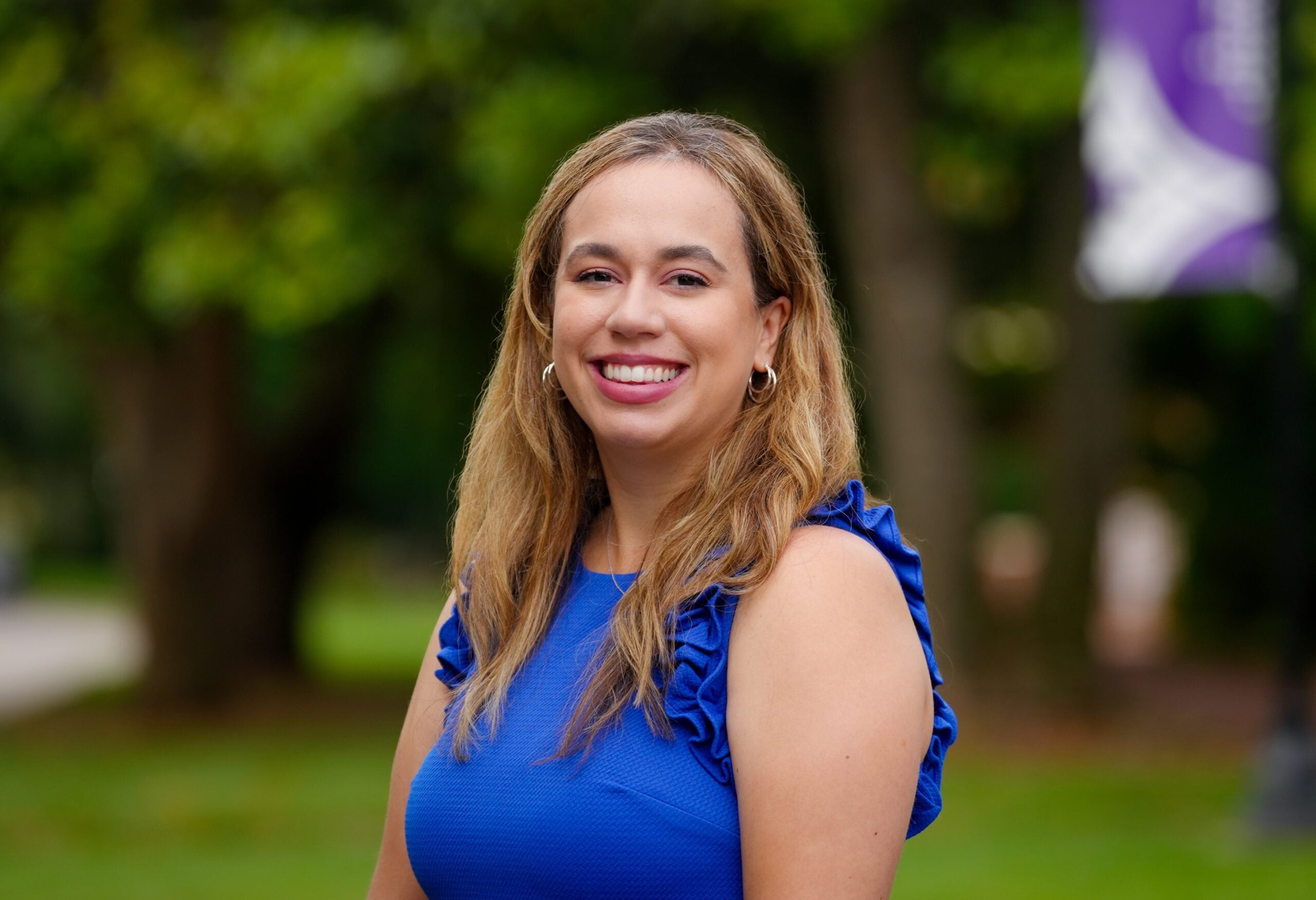
Shauna Bowes
Assistant Professor of Psychology
- Email: [email protected]
- Phone: 864.294.2400
- Office: Johns Hall, 206-D
Shauna Bowes is originally from Chattanooga, TN. She received her undergraduate degree in Neuroscience and Behavioral Biology from Emory University in Atlanta, GA in 2017. She loved her time at Emory as an undergraduate, so she stayed for her Ph.D., receiving her doctoral degree in Clinical Psychology in 2023. She also completed her clinical internship at the Emory University Child and Adolescent Mood Program in 2023. She then completed a National Science Foundation Social, Behavioral, and Economic Sciences Postdoctoral Fellowship at Vanderbilt University in 2025. She worked as an Assistant Professor in Psychology at The University of Alabama in Huntsville in 2025-2026 before becoming an Assistant Professor in Psychology at Furman University in 2026.
Dr. Bowes' research program incorporates her diverse training in clinical, social, cognitive, and developmental psychology to uncover how people form, maintain, and interact with their beliefs and identities. Her work centers around the individual differences factors that make people turn toward and away from accuracy and open-mindedness, with a particular focus on intellectual humility, misinformation, and polarization. She is dedicated to mentorship and actively incorporates undergraduate research assistants at all stages of research, from data collection to data analysis to publication. One of the aspects of her career she finds most rewarding is helping students identify their research interests, grow in their intellectual curiosity, and pursue a career path that is meaningful to them! Dr. Bowes is always excited to talk to undergraduates about their courses, research, professional opportunities, and anything else! Dr. Bowes currently teaches courses on Social Psychology, Personality, Psychology of Misinformation, and Research Methods.
When she is not conducting research, teaching, or doing clinical work she enjoys traveling, drinking lots of coffee and tea, watching reality TV, trying new foods, cooking and baking, being outside, spending time with her husband and her baby girl (Presley!), all things dog-related, and reading.
Honors and Awards
2026
Clinical Research Loan Repayment Renewal Award, Eunice Kennedy Shriver National Institute of Child Health and Human Development (NICHD)
2024
Clinical Research Loan Repayment Award, Eunice Kennedy Shriver National Institute of Child Health and Human Development (NICHD)
2023
National Science Foundation Social, Behavioral, and Economic Sciences Postdoctoral Research Fellowship
2020
Jenessa Shapiro Graduate Research Award, SPSP
Education
- NSF SBE Postdoctoral Fellowship, Vanderbilt University
- Clinical Psychology Internship at the Emory University Child and Adolescent Mood Program
- Ph.D., Emory University; M.A., Emory University
- B.S., Emory University
Research Interests
My research aims to illuminate the psychological factors that predict accurate and open-minded thinking and those that predict inaccurate and close-minded thinking. To do so, I investigate belief in misinformation, political polarization, and intellectual humility as three separate (yet interrelated) windows onto how people form and interact with their beliefs and engage with outgroup individuals. I leverage my diverse training in clinical, social, developemntal, and cognitive psychology to identify how, when, and why people latch onto certain beliefs. My past and ongoing research can be organized into three broad themes.
Psychology of conspiracy belief. Misinformation has the potential to spread like wildfire and affect decision-making in ways that spill into fundamental domains of living (e.g., medical treatment, cooperation). Now more than ever, in the so-called “Age of Misinformation”, an understanding of the psychological factors that make people turn toward and away from false information is needed. But most research takes place in discipline-specific silos (e.g., cognitive psychology, political science), precluding systematic efforts to generate testable frameworks on misinformation susceptibility. My work ties together multiple perspectives and methods to arrive at integrative conclusions about who is susceptible to misinformation and why. My research has largely focused on one consequential and unique manifestation of belief in misinformation: conspiracy belief. Elucidating who conspiracy theorists are, clarifying how their beliefs manifest, and identifying the consequences of conspiracy belief are compelling issues that I will continue to pursue.
Understanding intellectual humility and its implications for decision-making and polarization. Misinformation susceptibility and holding evidence-based and open-minded beliefs are two sides of the same coin. Targeting both sides at once affords us the opportunity to not only reduce problematic beliefs but increase rational beliefs. Both steps are necessary to create a wiser, less polarized society. One salient construct in the context of decision-making is intellectual humility (IH), which refers to tendencies to recognize one’s intellectual limitations and remain open to different points of view. My research evaluates whether IH can improve decision-making and intergroup relations. Specifically, I examine whether IH contributes to more open-mindedness and accuracy across varied issues, social identities, and belief domains.
Clarifying the psychology of belief rigidity and extremism. Intellectual humility (IH) is often considered a ‘‘virtuous mean’’, meaning it is distinguishable from both dogmatism (or intellectual arrogance) and diffidence (or intellectual servility). In addition to understanding the virtuous mean of IH, I seek to understand both extremes of the belief spectrum: unjustifiable belief certainty and diffidence. My research has evaluated the psychology of belief extremism across the belief spectrum, ideological orientations, and belief systems. I aim to shed light on the boundary conditions in the relations amongst extremism, rigidity, ideology, and individual differences variables.
Publications
- Van Tongeren, D. R., & Bowes, S.M. (accepted). Residual authoritarianism: Religious dones report the highest levels of left-wing authoritarianism. Psychology of Religion and Spirituality.
- Prinzing, M., Bowes, S.M., Melton, K., Glanzer, P., & Schnitker, S. (2026). Metacognitive and interpersonal intellectual humility are asymmetrically associated with well-being. Personality and Social Psychology Bulletin.
- Bowes, S.M., & Clark, C. J. (2026). Rebuilding trust in CBT: Intellectual humility and multicultural competencies as responses to political criticism. Current Opinion in Psychology.
- Bowes, S. M., & Fazio, L. K. (2026). Does repetition increase perceived truth equally for conspiracy and trivia statements?: A registered replication report. Psychonomic Bulletin & Review, 33. Advanced online publication.
- Krumrei-Mancuso, E. J., Ge, B. H., & Bowes, S. M. (2026). Remarkable hospitality: A study of interpersonal hospitality exemplars. Journal of Positive Psychology. Advanced online publication.
- Porter, T., Bowes, S.M.*, Lehman, M.*, & Koetke, J.* (2025). Intellectual humility and trust. Current Opinion in Psychology, 68. Advanced online publication.
*Authors contributed equally to the work. - Bowes, S. M., Clark, C. J., Conway, L., Costello, T. H., Osborne, D., Tetlock, P. E., & van Prooijen, J. W. (2025). An adversarial collaboration on the rigidity‐of‐the‐right, symmetry thesis, or rigidity‐of‐extremes: The answer depends on the question. Political Psychology.
- Bowes, S. M., & Novick, K., Lourenco, S. F., & Tasimi, A. (2025). Do children value intellectual humility over intellectual arrogance? Developmental Psychology.
*Featured in the Greater Good Science Center’s “Top 10 Insights from the ‘Science of a Meaningful Life’ in 2025” piece - Bowes, S. M., & Tasimi, A. (2025). Intellectual humility and belief extremity: Evidence for curvilinearity? Social Psychological and Personality Science.
- Koetke, J., Schumann, K., Bowes, S. M., & Vaupotic, N. (2025). Seeing scientists as intellectually humble increases trust in scientists and their research. Nature Human Behaviour, 9, 331-344.
- Lee, Y., McLaughlin, A., Bowes, S. M., Hook, J. N., Van Tongeren, D. R., Owen, J., & Davis, D. E. (2025). What is humility good for?: A meta-analytic review of health, depression, anxiety, life satisfaction, and meaning in life. The Counseling Psychologist, 53, 881-912.
- Bowes, S. M., & Fazio, L. K. (2024). Intellectual humility and misinformation receptivity: A meta-analytic review. Advances in Psychology. In the From Vulnerability to Vigilance: Cultivating Psychological Resilience Against Misinformation and Conspiracy Beliefs special collection (Kunst, J. R., & Dovidio, J. F. (Eds.)).
- Bowes, S. M., & Tasimi, A. (2024). How intellectual humility relates to political and religious polarization. Journal of Positive Psychology, 20, 569-581.
- Bowes, S. M., Ringwood, A., & Tasimi, A. (2024). Is intellectual humility related to more accuracy and less overconfidence? Journal of Positive Psychology, 19, 538-555.
- Bowes, S. M., Costello, T. H., & Tasimi, A. (2023). The conspiratorial mind: A meta-analytic review. Psychological Bulletin, 149, 259-293.
*Selected as an Editor’s Choice from the American Psychological Association - Bowes, S. M., & Fazio, L. K. (2023). Are conspiracy theorists inaccurate, unmotivated to be accurate, or both?: A latent class analysis. Routledge Open Research. In the Conspiracy Theories and Misinformation special collection (Uscinski, J., Biddlestone, M., & Cavojova, V. (Eds.)).
- Bowes, S. M., & Tasimi, A. (2023). Is intellectual humility “good” for people? Journal of Positive Psychology, 18, 205-253.
- Costello, T. H., & Bowes, S. M. (2023). Absolute certainty and political ideology: A systematic test of curvilinearity. Social Psychological and Personality Science, 14, 93-102.
- Costello, T. H., Bowes, S. M., Baldwin, M., Malka, A., & Tasimi, A. (2023). Revisiting the rigidity-of-the-right hypothesis: A meta-analytic review. Journal of Personality and Social Psychology, 124, 1025-1052.
- Davis, D. E., Bowes, S. M., McLaughlin, A., Hsu, W., Gazaway, S., McElroy-Heltzel, S., Van Tongeren, D. R., & Hook, J. N. (2023). In search of convergent creativity: Content analysis of research on intellectual humility. Journal of Positive Psychology, 18, 304-315.
- McLauglin, A., Van Tongeren, D. R., McElroy-Heltzel, S., Bowes, S. M., Rice, K., Hook, J. N., DeWall, N., & Davis, D. E. (2023). Intellectual humility in the context of existential commitment. Journal of Positive Psychology, 18, 289-303.
- Whitt, C., Tullett, A., Bowes, S. M., McDiarmid, A., Lilienfeld, S. O., & Hart, W. (2023). Weakening the ideological immune system: Can debiasing techniques reduce confirmation bias? Comprehensive Results in Social Psychology, 7, 1-24.
- Lilienfeld, S. O., Bowes, S. M., Strother, A. N., Liu, C. J., Costello, T. H., Norton, K. A., & Latzman, R. D. (2023). Are grants needed for outstanding scholarly achievement? A survey of the world’s most eminent psychologists. Current Psychology, 42, 29325-29336.
- Bowes, S. M., Costello, T. H., Lee, C., McElroy-Heltzel, S., Davis, D. E., & Lilienfeld, S. O. (2022). Stepping outside the echo chamber: Is intellectual humility associated with less political myside bias? Personality and Social Psychology Bulletin, 48, 150-164.
- Bowes, S. M., & Tasimi, A. (2022). Clarifying the relations between intellectual humility and pseudoscience beliefs, conspiratorial ideation, and susceptibility to fake news. Journal of Research in Personality, 98. Advanced online publication.
- Bowes, S. M., & Tasimi, A. (2022). Clarifying the relations between intellectual humility and pseudoscience beliefs, conspiratorial ideation, and susceptibility to fake news. Journal of Research in Personality, 98. Advanced online publication.
- Costello, T. H., Bowes, S. M., Stevens, S. T., Waldman, I. D., Tasimi, A., & Lilienfeld, S. O. Clarifying the structure and nature of left-wing authoritarianism. (2022). Journal of Personality and Social Psychology, 122, 135-170.
- Bowes, S. M., Costello, T. H., Ma, W., Lilienfeld, S. O. (2021). Looking under the tinfoil hat: Clarifying the personological and psychopathological correlates of conspiracy beliefs. Journal of Personality, 89, 422-436.
- Bowes, S. M., Ammirati, R. J., Costello, T. H., Basterfield, C., & Lilienfeld, S. O. (2020). Cognitive biases, heuristics, and logical fallacies in clinical practice: A brief field guide for practicing psychologists. Professional Psychology: Research and Practice, 51, 435-445.
- Bowes, S. M., Blanchard, M. C., Costello, T. H., Abramowitz, A., & Lilienfeld, S. O. (2020). Intellectual humility and between-party animus: Implications for affective polarization in two community samples. Journal of Research in Personality, 88. Advanced online publication.
- Costello, T. H., Bowes, S. M., Lilienfeld, S. O. (2020). "Escape from Freedom": Authoritarianism-related traits, political ideology, personality, and belief in free will/determinism. Journal of Research in Personality, 86, 1-16.
- Lilienfeld, S. O., Costello, T. H., Bowes, S. M., Strother, A. (2020). Has psychology found its conscience? European Journal of Personality, 34, 529-530.
- Bowes, S. M., Brown, A., Thompson, W. W., Sellbom, M., & Lilienfeld, S. O. (2019). Do psychopathic traits statistically protect against PTSD? A retrospective study of Vietnam Veterans. Journal of Personality Disorders, 35, 127-144.
- Bowes, S. M., Watts, A. L., Thompson, W. W., & Lilienfeld, S. O. (2019). Clarifying the association between psychopathy dimensions and internalizing symptoms in two community samples: The role of general personality. Personality and Individual Differences, 147, 144-155.
- Lilienfeld, S. O., Watts, A. L., Murphy, B. A., Costello, T. H., Bowes, S. M., Smith, S. F., Latzman, R. D., Haslam, N., & Tabb, K. (2019). Psychopathy as an emergent interpersonal syndrome: Further reflections and future directions. Journal of Personality Disorders, 33, 645-652.
- Lilienfeld, S. O., Watts, A. L., Murphy, B. A., Costello, T. H., Bowes, S. M., Smith, S. F., Latzman, R. D., Haslam, N., & Tabb, K. (2019). Personality disorders as conditions of interpersonal impact: The conundrum of psychopathic personality as a case example. Journal of Personality Disorders, 33, 577-622.
- Bowes, S. M., Watts, A. L., Costello, T. H., Murphy, B. A., & Lilienfeld, S. O. (2018). Psychopathy and entertainment preferences: Clarifying the role of abnormal and normal personality in music and movie interests. Personality and Individual Differences, 129, 33-37.
- Costello, T. H., Smith, S. F., Bowes, S. M., Riley, S., Berns, G., & Lilienfeld, S. O. (2018). Risky Business: Psychopathy, Framing Effects and Financial Outcomes. Journal of Research in Personality, 7, 125-132.
- Lilienfeld, S. O., Sauvigné, K. C., Reber, J., Watts, A. L., Hamann, S., Smith, S. F., Patrick, C. J., Bowes, S. M., & Tranel, D. (2018). Potential effects of severe bilateral amygdala damage on psychopathic personality features: A case report. Personality Disorders: Theory, Research, and Treatment, 9, 112-121.
- Watts, A. L., Bowes, S. M., Latzman, R. D., & Lilienfeld, S. O. (2017). Psychopathic traits predict harsh attitudes toward rape victims among undergraduates. Personality and Individual Differences, 106, 1-5.
Additional Professional Activities
2026
Advisory Board Member for Survey Experiments for the Scientific Study of Religion (SESSR)
2025
Guest Editor for the Political Ideology and Religion Collection at Scientific Reports
Co-chair for the SPSP Misinformation & Belief Science Preconference Organizing Committee
Licensed clinical psychologist in the state of TN
0