News from campus and beyond
Furman alumna Robeson examines justice in The Nation
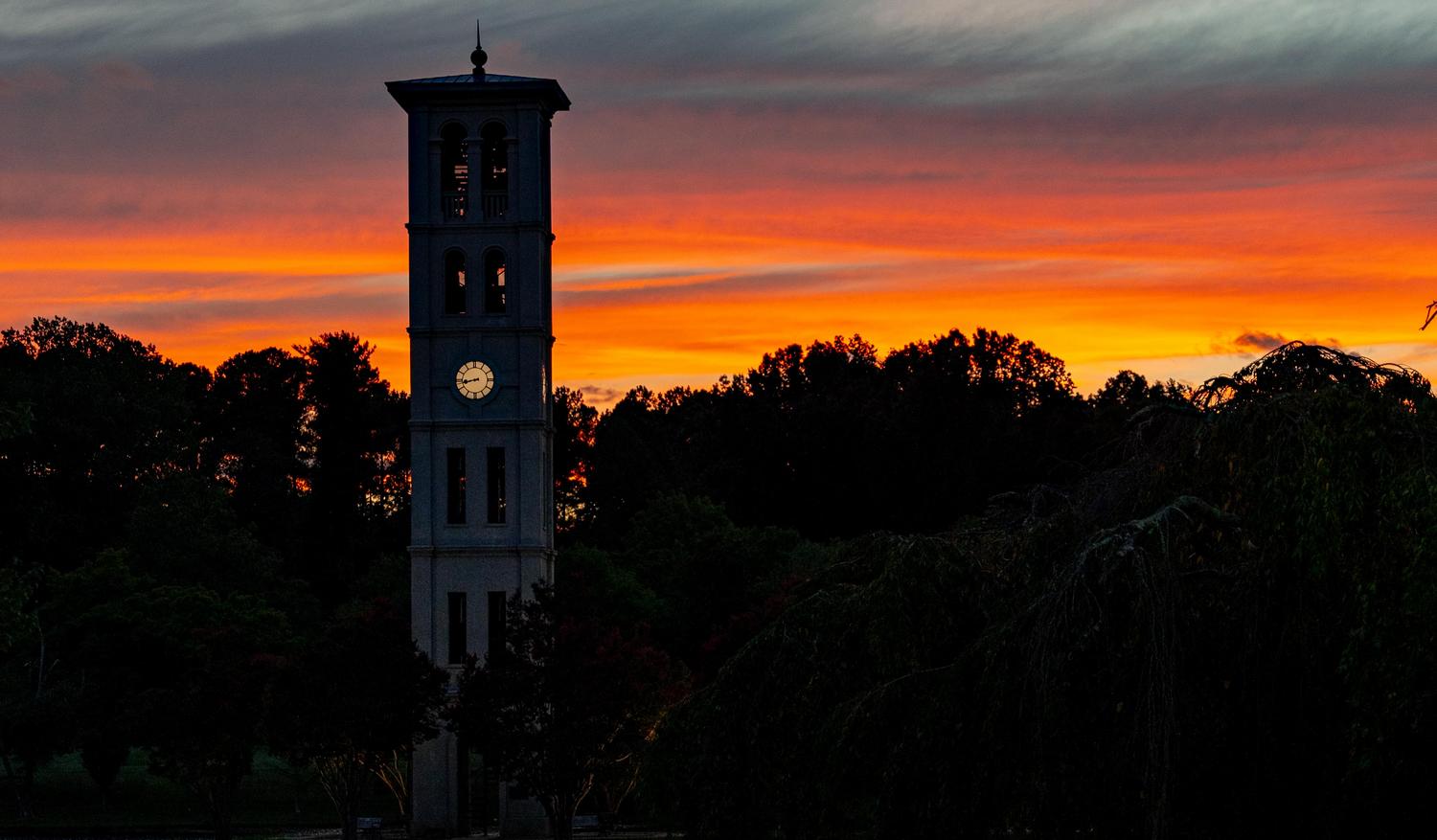
Bell tower at Furman University.
Elizabeth Robeson ’79 published two articles in The Nation. In the May 2025 issue, Robeson, who was known as Lynn Pearson when she was enrolled at Furman, reflects on the mingling of names on the National Law Enforcement Officers Memorial in Washington D.C., which includes people who died heroically and people whose reputations were steeped in brutality, racism, corruption and white supremacy.
“Of the 378 South Carolinians on the wall, well over a third died under the Redeemer (a movement in the post-Civil War South) and Jim Crow regimes; they include Klansmen, lynch leaders, chain gang guards, extortionists, and murderers. Perhaps a dozen died heroic deaths,” she writes.
In the June issue of The Nation Robeson pushes back on the notion that Dylann Roof, who killed nine Black people at Mother Emanuel AME Church in Charleston in 2015, was an “outlier.” She chronicles a history of leadership in the state over a century and a half that may have stoked Roof’s worldview and contributed to his act of violence.
After graduating Furman University with a bachelor’s in history, Robeson worked as press secretary to the late U.S. Senator John Heinz of Pennsylvania. She holds a master’s in American history from the University of Mississippi and was awarded a doctoral fellowship to Columbia University where she studied with MacArthur Fellow Barbara Fields and Alan Brinkley. At Brinkley’s request, she ghost wrote “Brinkley’s Beat: People, Places, and Events That Shaped My Time,” about NBC/ABC News anchor David Brinkley, Alan Brinkley’s father.
She is the creator of the Substack series “Chronicles of Judiciary Square,” and she’s writing a book that examines the 1926 triple lynching of members of the Lowman family in Aiken, South Carolina. Robeson lives in Columbia, South Carolina.