News from campus and beyond
Furman junior Anna Moon ’28 leads regional biodiversity research project
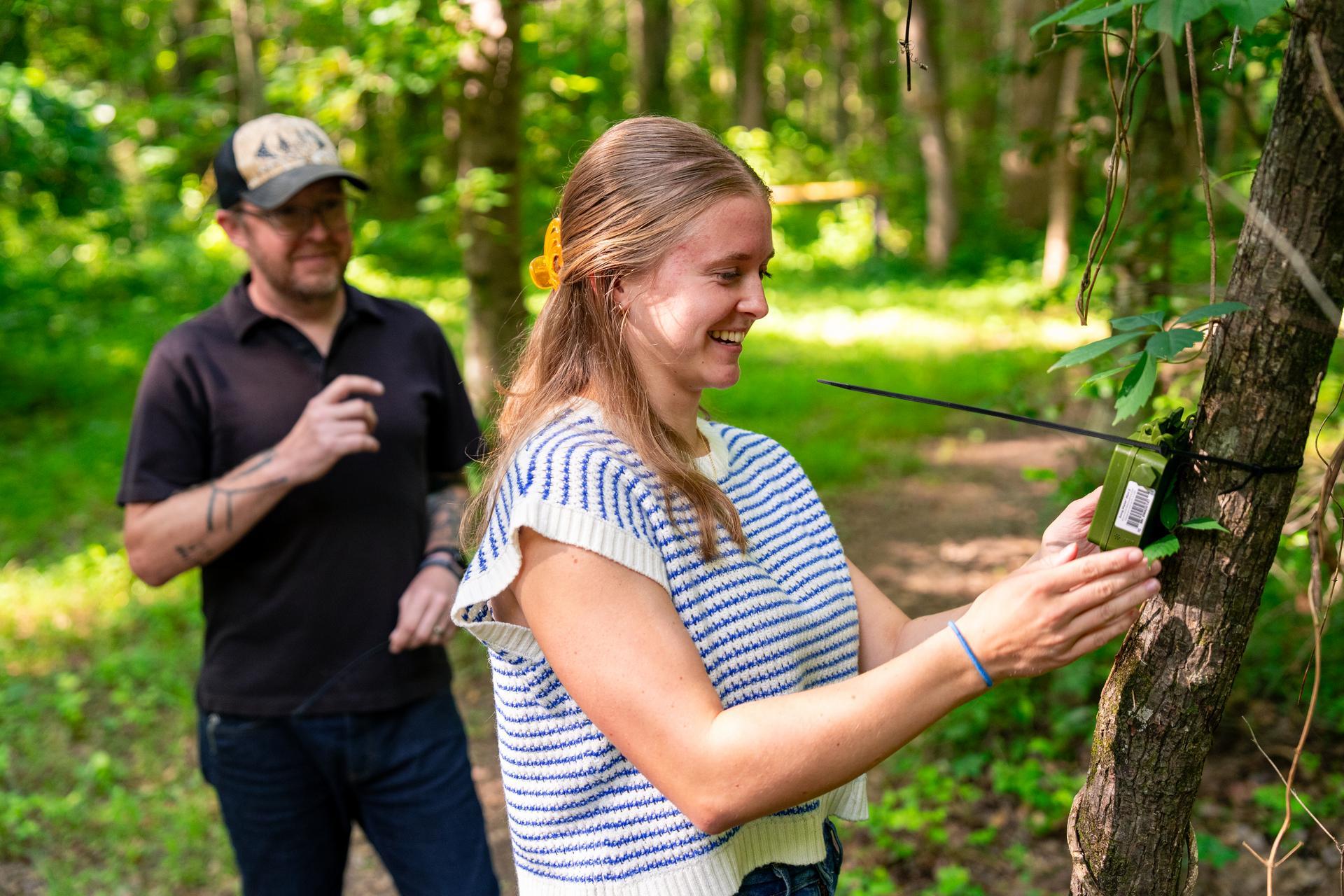
Professor John Quinn and student Anna Moon ’28 head out into the woods behind campus to set up devices as part of Moon’s bird sound and biodiversity research. Photo by Owen Withycombe, Furman University.
Furman University junior Anna Moon ’28 is spending her summer listening to the birds.
Across the Carolinas, recording devices placed in a variety of landscapes are recording bird songs. In Greenville, South Carolina, Moon is using machine learning to identify the birds caught on these microphones, and seeing how the environment supports local biodiversity.
“Machine learning can identify the birds and frogs that are vocalizing, but this summer we’re really working on verification,” said John Quinn, the Henry Keith and Ellen Hard Townes Professor of Biology and Moon’s research mentor. “It’s important that our students be on that forward-edge with technology and techniques.”
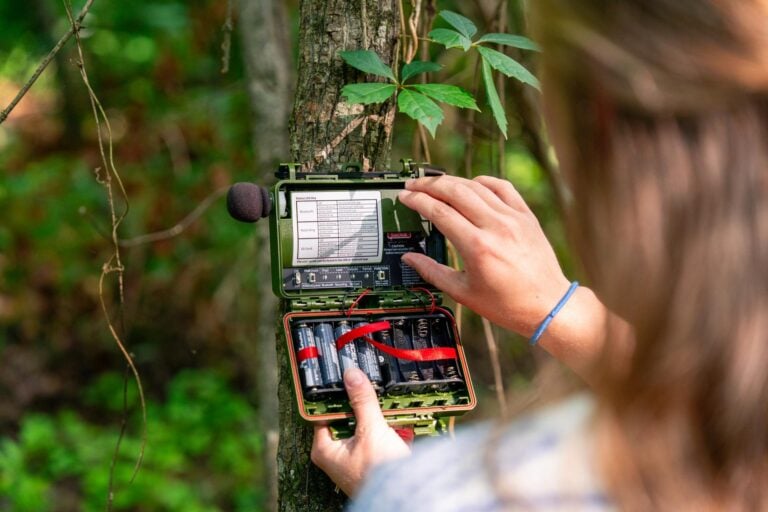
Recording devices help Anna Moon ’28 study the effects land use has on how an environment supports biodiversity. Photo by Owen Withycombe, Furman University.
Moon, a sustainability sciences and Spanish double-major from Alabama, knew coming to Furman that she wanted to work in nature conservation. After studying birds in one of Quinn’s classes her first year, she spent that summer doing remote research from home helping identify the birds caught on these field recorders.
“This summer I’m on campus, and it feels more like my own project. I feel more invested,” Moon said.
At Furman, students don’t have to wait until their senior year to get practical research experience, Quinn said. As a first-year student, Moon joined a lab and learned the basics, and this year she’s taken on more responsibility and ownership over her independently led project.
“I didn’t know you could do this; it never crossed my mind,” she said. “I would love to explore this kind of work with different animals as well.”
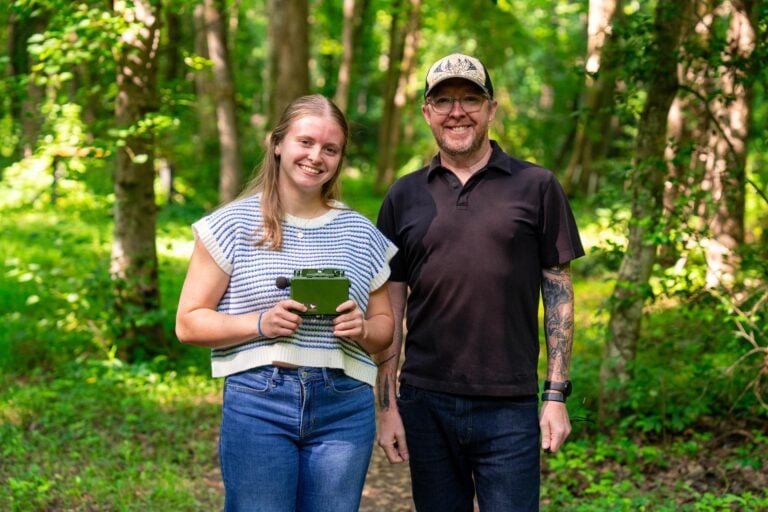
Through lab work with professor John Quinn, right, Anna Moon ’28 is expanding her research through parts of Western North Carolina in partnership with a professor at Western Carolina University. Photo by Owen Withycombe, Furman University.
Moon said it’s been rewarding to get out of the lab and into nature. Her birdsong data, paired with insect data from her partner at Western Carolina University, can be used to track migration patterns, how weather affects these animals and how animals use these locations, among other insights.
Moon is one of the students working in Quinn’s Coupled Human-Environmental Sustainability Solutions (CHESS) Lab this summer. The CHESS Lab is an interdisciplinary collaboration of students and professors across the university tackling complex conservation and sustainability problems by providing evidence-based solutions for decision-makers.
“This is a broad research question that Anna and other students have been plugging into for nearly 20 years,” Quinn said. “Bioacoustics is the unique lens asking the question ‘What does the soundscape have to say about biodiversity?’”