News from campus and beyond
Where it all Started
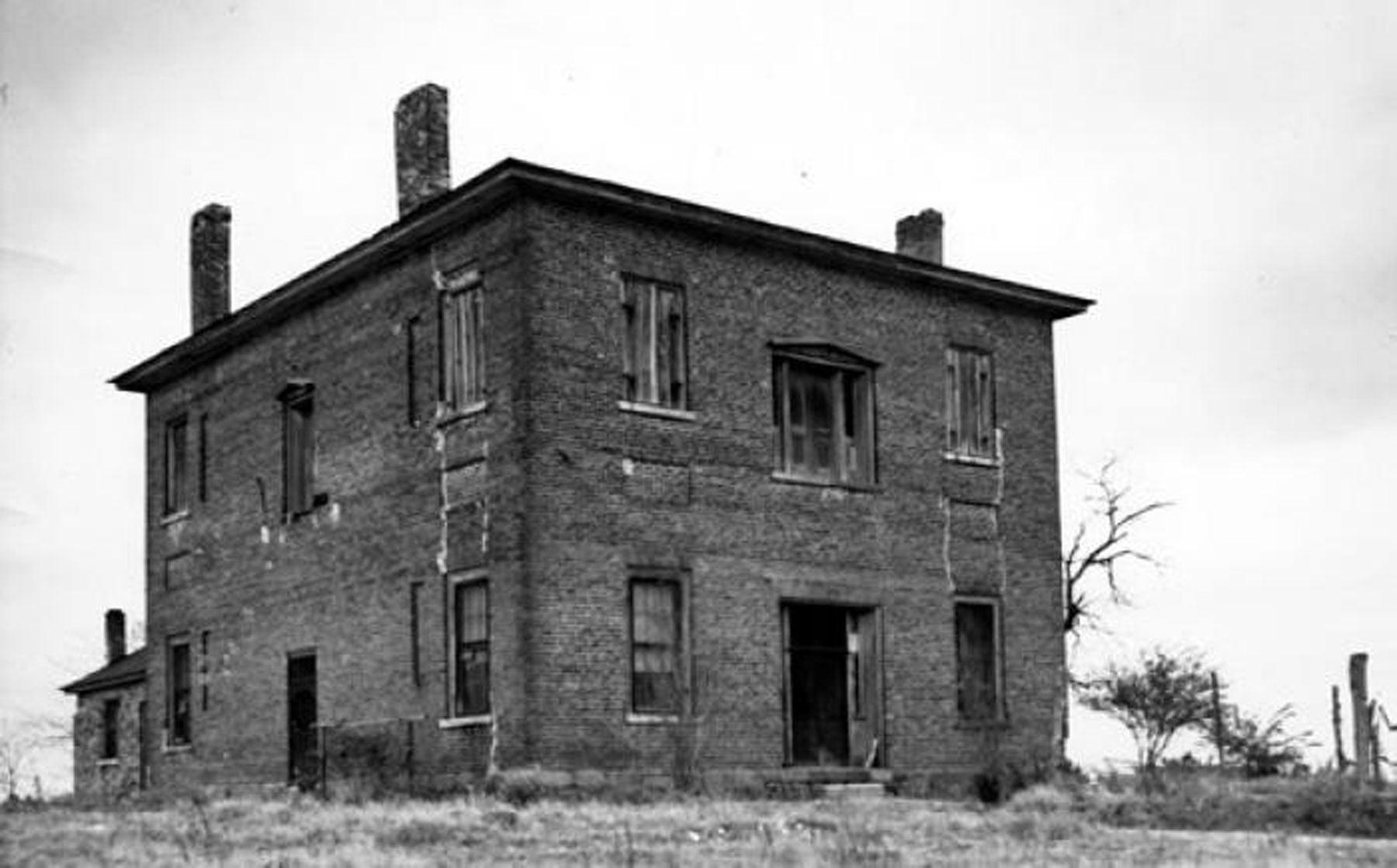
The original academic building for Furman University in Winnsboro.
FURMAN UNIVERSITY has been synonymous with Greenville, South Carolina, for more than 150 years, but it’s not actually where the school began. For the first 25 years Furman would call three different Midlands communities home before coming to downtown Greenville and, eventually, its 940-acre home.
At President Davis’s request, Furman’s distinguished university public historian Courtney Tollison ’99 compiled the complete history of the university in honor of the Bicentennial, including the early struggles in those communities. Excerpts have been pulled and photos uncovered to tell that story.
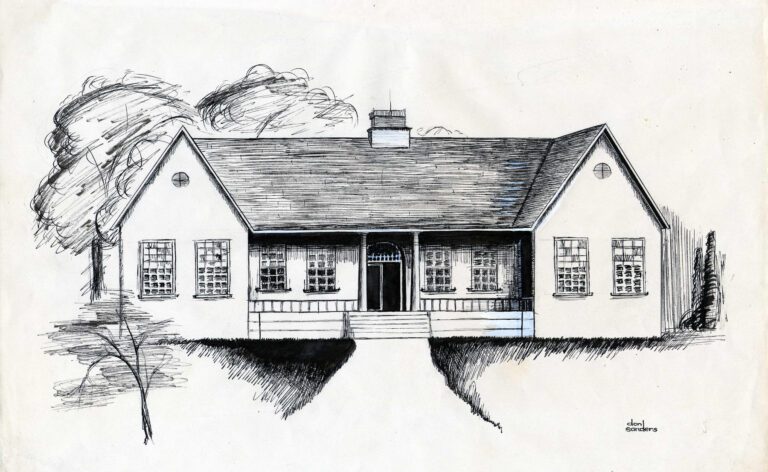
Pen sketch of the Edgefield School House.
EDGEFIELD, S.C. 1827
The first classes of the Furman Academy and Theological Institution commenced on January 15, 1827.
POPULATION: 2,322
WHAT YOU WILL SEE
Edgefield Historic District covers much of downtown and includes dozens of 19th-century buildings, many of them homes, churches and public buildings
Edgefield Pottery has been practiced there since the early 1800s. Pieces made by early artisans — including those by enslaved potters — are now collectible and historic.
WHAT YOU CAN DO
Oakley Park Museum a historic house/museum
Edgefield Discovery Center a museum and visitor center detailing the history of the town and county
Shopping and Dining Downtown Edgefield is filled with mom-and-pop shops, boutiques and local restaurants
QUICK FACTS
Edgefield is the county seat of Edgefield County.
The county and town trace its settled roots to 1785, but it was originally inhabited by Algonquian-speaking Indigenous peoples.
Edgefield has produced 10 South Carolina governors.
In recent decades, there has been a push toward historic preservation and tourism, leveraging its architecture, heritage and local crafts.
From “Furman University, 1826-2026: A Bicentennial History” by Courtney Tollison ’99
The Board of Agents of the Furman Academy and Theological Institution selected Edgefield as the site for the new institution because of Edgefield’s evangelical energy, the donation of lands belonging to Edgefield’s existing Village Academy, and its proximity to the South Carolina–Georgia border. South Carolina Baptists hoped that the Georgia Baptist Convention would also embrace the institution, but unfortunately the hoped-for aid never materialized, and struggles ensued. The first principal, Dr. Joseph Andrews Warne, resigned after just a year and the student body diminished to a mere three students. Ultimately, the Board of Trustees decided to move to the High Hills of Santee, where the theological department could be more fully developed as the cornerstone of the school.
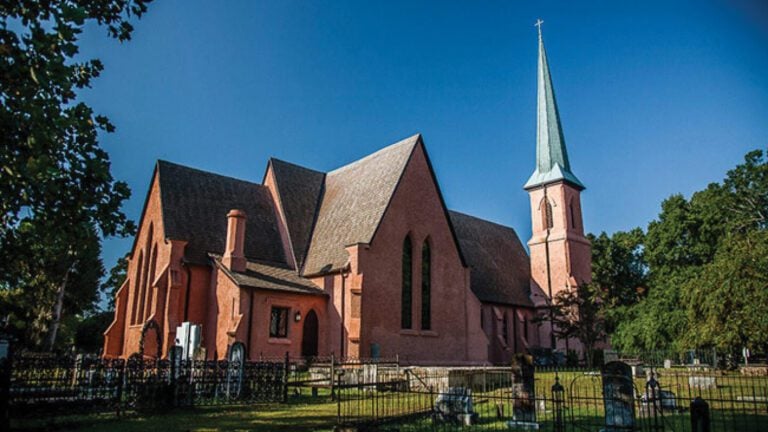
Church of the Holy Cross
HIGH HILLS OF SANTEE (now Stateburg, S.C.) 1829
Now known as the Furman Theological Institution, the school opened in the Hills of Santee in Sumter County, the site of Dr. Richard Furman’s first pastorate, and trained young men for the ministry.
POPULATION: 1,593
WHAT YOU WILL SEE
Borough House Plantation considered the largest assemblage of high-style rammed-earth (pisé de terre) buildings in the U.S. The main house and multiple outbuildings date from the late 1700s/early 1800s.
Church of the Holy Cross designed by architect Edward C. Jones (who also designed Furman’s first building in Greenville, Old Main, with its Florentine Bell Tower), and constructed using rammed-earth walls.
WHAT YOU CAN DO
Stateburg Historic District: Explore historic sites with properties like Borough House (National Historic Landmark), The Ruins (Sumter’s home), the Chapel of Ease and Brookland Plantation.
General Sumter’s grave: Visit the tomb of Revolutionary War Gen. Thomas Sumter, managed as part of Poinsett State Park.
Tour churches: See the historic Church of the Holy Cross and the High Hills of Santee Baptist Church.
QUICK FACTS
Stateburg is a “census-designated place.”
Founded by Thomas Sumter in 1783
In the 1786 race for the state capital, Stateburg narrowly lost to what would become Columbia, South Carolina.
It was the county seat of Claremont County before the county was dissolved in 1800.
From “Furman University, 1826-2026: A Bicentennial History” by Courtney Tollison ’99
In the High Hills, the school had only two professors: Dr. Jesse Hartwell, a member of Furman’s Board of Agents, and Dr. Samuel Furman. Students lived in Hartwell’s home and practiced their preaching skills in the same pulpit where Dr. Richard Furman had preached. Though the professorial pair were dedicated to their students, they resigned in 1834 due to seemingly insurmountable financial troubles. Without any professors, and none willing to fill the vacancy, Furman was forced to close. Throughout Furman’s closure, the devoted South Carolina Baptist Convention persistently contemplated strategies to resuscitate the institution and maintain its viability.
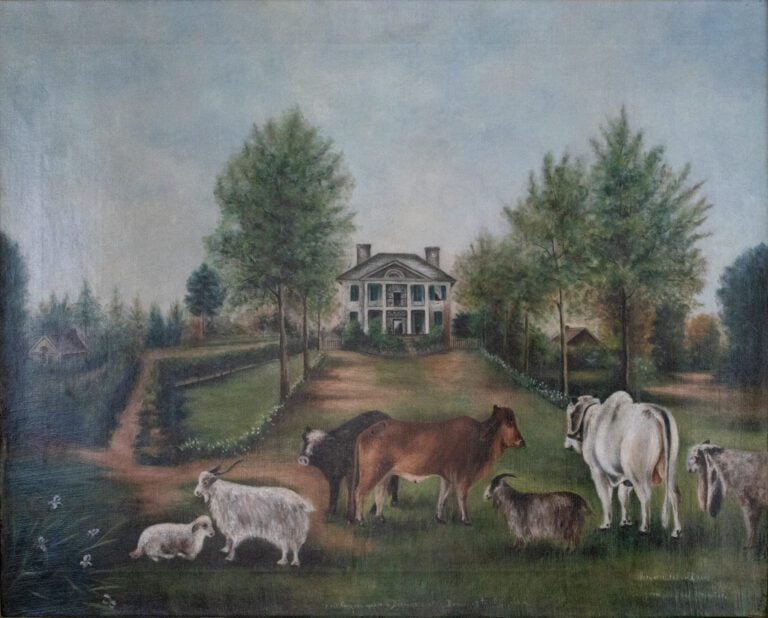
Davis Plantation
WINNSBORO, S.C. 1837
Three years after it closed, the Furman Institution reopened in Winnsboro in Fairfield County, South Carolina.
POPULATION: 3,215
WHAT YOU WILL SEE
Winnsboro Town Clock: Built between 1835 and 1837, this is often noted as the longest continuously running town clock in the United States.
Fairfield County Courthouse: Constructed in 1823 by famed architect Robert Mills (who also designed the Washington Monument), this Greek-Revival building sits downtown across from the Town Clock.
Ketchin Building: This c.1830 building was once a private residence, then a women’s school, and now is part of the local historic fabric.
WHAT YOU CAN DO
Carolina Adventure World: An outdoor destination just outside town. With about 2,600 acres, it offers 100+ miles of ATV and dirt-bike trails, motocross courses and camping.
South Carolina Railroad Museum: Visitors can see historic rail cars and sometimes ride trains.
Fortune Springs Park: A peaceful downtown park with gardens, ponds and green space — a nice break among historic buildings.
Fairfield County Museum: Housed in a restored 1830s building (the old Ketchin Building), this museum showcases local history, and genealogy resources.
QUICK FACTS
Founded in 1786 as Wynnsborough
Named for Richard Winn, a Revolutionary War figure
Industrial town of timber, cotton, mills and railways
Now a historic town with small-town vibes
Because of its historic district and preserved architecture, Winnsboro has sometimes been called the “Charleston of the Upcountry.”
Historically, Winnsboro has a strong legacy of education: e.g., the old Mt. Zion Institute — founded in 1777 — was one of the earliest schools in the Upstate.
From “Furman University, 1826-2026: A Bicentennial History” by Courtney Tollison ’99
The move to Winnsboro was spurred by an offer from Rev. Jonathan Davis, the first chair of Furman’s Board of Trustees and vice president of the South Carolina Baptist Convention. Davis purchased 557 acres of fertile land near Fairfield Baptist Church and paid for the original buildings.
Here, to generate much-needed revenue, Furman experimentally adopted manual labor into its curriculum, with students expected to work on the farm 2 ½ hours a day and study in their remaining hours. Disaster struck when one student was killed after a fire,
possibly set by a disgruntled student, that destroyed the campus within a year
of its opening.
In 1841, the tumultuous manual labor experiment was deemed a failure, and thus its location on a large tract of farmland in the open country made little sense for a school that educated preachers. Furman set its sights on a new location. Leaders scoured the Upcountry, which they believed to be a promising possibility. It had a more temperate climate, with fewer mosquitoes, and by embracing manufacturing, it had already distinguished itself economically from the agriculturally focused Midlands and Lowcountry.