News from campus and beyond
Erin Wamsley quoted in TIME about memory and learning
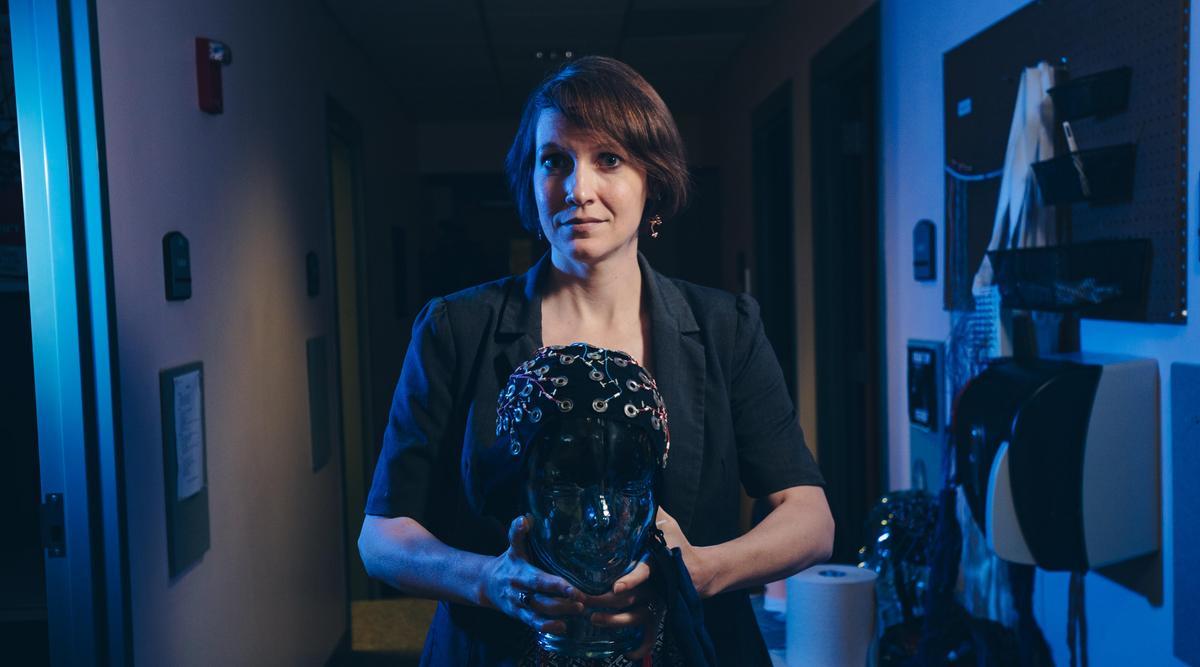
Erin Wamsley, Department of Psychology, in the Furman Sleep Lab.
In a TIME magazine article, Furman University cognitive neuroscientist Erin Wamsley argues that less is more when it comes to retaining newly acquired information. The story explores the glut of mostly digital content our society is exposed to – about 12 hours per day according to some estimates – and how the brain needs “offline states” so it can revisit recent material and process the information.
“People are generally not aware that their brain is doing something very important when they’re not doing anything,” said Wamsley, an associate professor in the Department of Psychology. “But this offline processing is a crucial aspect of memory.” And without mental downtime, our ability to recall and make sense of what we’ve learned may suffer.