For alumni and friends
of the university
of the university
Then, Now, Next: Columns from Furman faculty, staff and students
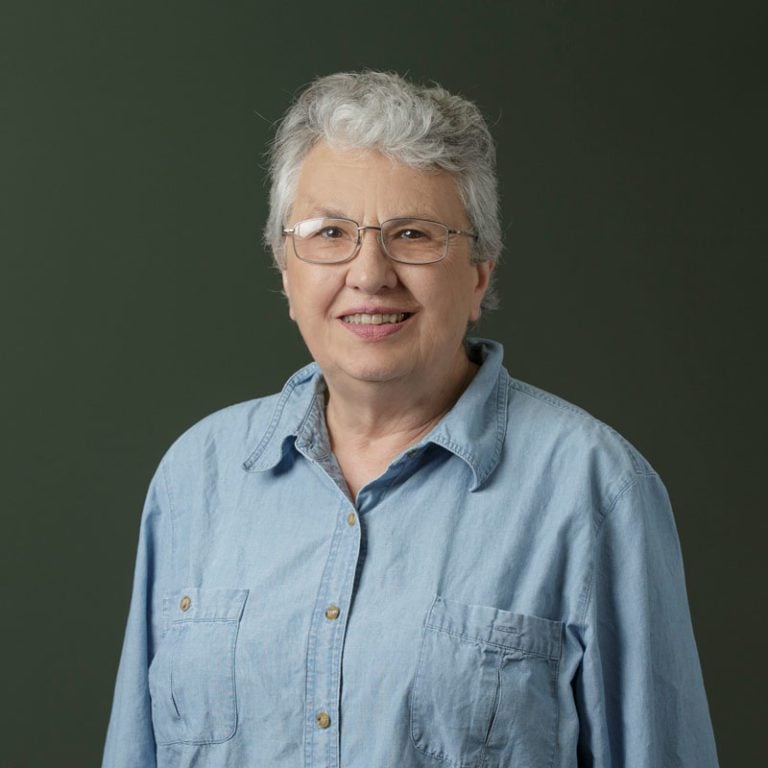
Willard Pate began her career at Furman University in 1964, teaching generations of Paladins for 61 years.
Then
The trees lining the mall were spindly. McAlister Auditorium stood at one end, and Furman Hall – and a small section of what is now called the Townes Science Complex – stood along the side. The library, the dining hall and the men’s and women’s dormitory complexes were in their present places. The only additional building was the old gym, now called the Alley Gym.
The winding stairs in the women’s dorm led down to chandeliered parlors where I’m sure the Southern ladies who were consulted about interior design envisioned afternoon teas and very open spaces that could accommodate “gentlemen callers.” Shorts, I was told by the students, could be worn only on the back campus, but I never did know whether that meant across the lake or just behind the library. Women were, however, allowed to sunbathe in the cupola atop the dorm. The rule about men having to wear socks had just recently been relaxed.
Meta and Delbert Gilpatrick (the Gillies), respectively of the English and History departments, had officially retired, but both still occasionally taught courses. They were the only members of Furman’s original, though unofficial, Honor Roll of great teachers I ever met. In my first year here, I learned much from the demanding Mrs. Gilpatrick and from John Crabtree, Al Reid and Jim Stewart, the three English Department giants who already were establishing their own reputations for great teaching when I joined the department.
That was fall term 1964 when Furman was awaiting the arrival of Gordon Blackwell, Furman graduate and then president of Florida State University, to take over the presidency in January 1965. Dr. Blackwell came in with the slogan, “Make Furman great by national standards.” Through the decades, the slogans have changed, but the challenges have not.
Certainly, the visionaries who had understood the need to build a new campus literally laid the groundwork for the march toward nationally recognized greatness, but it was Dr. Blackwell, joined by Dr. Francis Bonner, whom I champion as the first leaders of that march. And it was the great teachers like the Gilpatricks who helped establish what I believe is the greatest tradition at Furman: a faculty that has a passion for teaching their subjects to their students.
About the Author
Willard Pate is a professor of English at Furman University. In addition to teaching, she is a photographer. Her work has been exhibited both nationally and internationally. She published a book of her photographs titled “With Animals” in 2015.
Now
I find it ridiculous that my time as a student at Furman has come to an end. I recall arriving on campus from Ghana full of vigor to tackle whatever higher education had to offer me, and I indeed thoroughly enjoyed my time through it all.
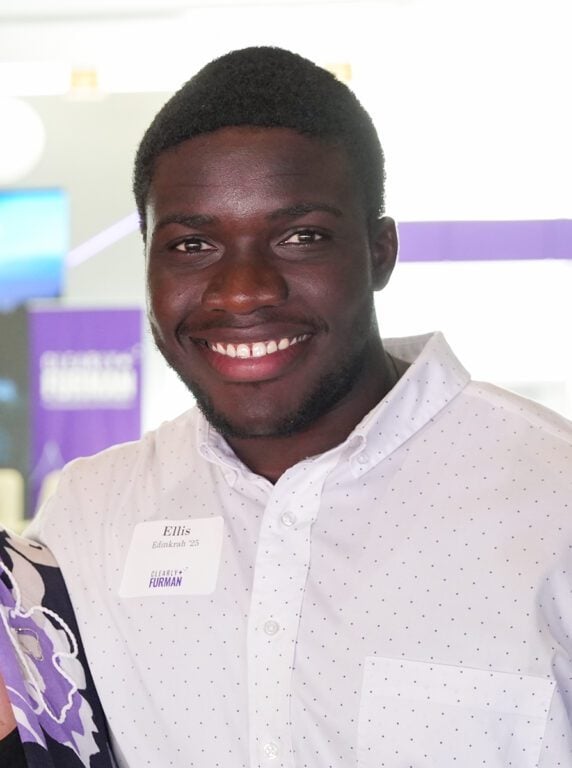
Ellis Edinkrah ’25 reflected on his time at Furman and what it meant to be a part of the university.
I had the pleasure of engaging in several programs in the past four years including the Cothran Center’s FOCUS program, where I had the opportunity to go to Northern Ireland to learn about The Troubles and methods of conflict resolution and reconciliation. I also took part in two MayX experiences – one to England to learn about cryptology and World War II, and the other to Walt Disney World to learn about the mathematics and physics behind the theme park. All these experiences were quite enriching for me not only with personal development, but also in shaping my soft skills like social interaction and preparing me for my future career.
Throughout my time at Furman, I explored many different subjects and areas of interest. Some of the most impactful came through the physics and mathematics departments as well as the Office of Institutional Assessment and Research on more than seven research projects. I was then given the opportunity to present some of my work at conferences and meet and learn from some giants in my fields of study.
With these projects, I worked with professors and faculty to tackle a vast array of problems and positing solutions to them. Some focused on the more theoretical side of my majors like Ring Theory. Others were based in real-world applications, like my work in optimizing the energy required for vertical lift.
I find what I most appreciate about my time at Furman is not the lovely campus, nor the myriad opportunities present, but the people. It is quite a rarity to form such close relationships with professors, staff and students. Some of my most cherished moments would be the times I spent walking around with professors or walking into their offices to discuss virtually anything. For me, Furman was truly a welcoming community and is the best place I could have had my undergraduate experience.
About the Author
Ellis Edinkrah graduated in May 2025 with degrees in applied mathematics and physics. He is from Kwahu, Ghana, and is attending graduate school.
Next
During the past few decades, as computer speed and data storage capacity have grown, businesses have sought to keep more data on their operations, their customers and their brand affinity. The need to manage and glean insights from that data also has grown, and fields such as data analytics, data engineering and database management have taken off as a result.
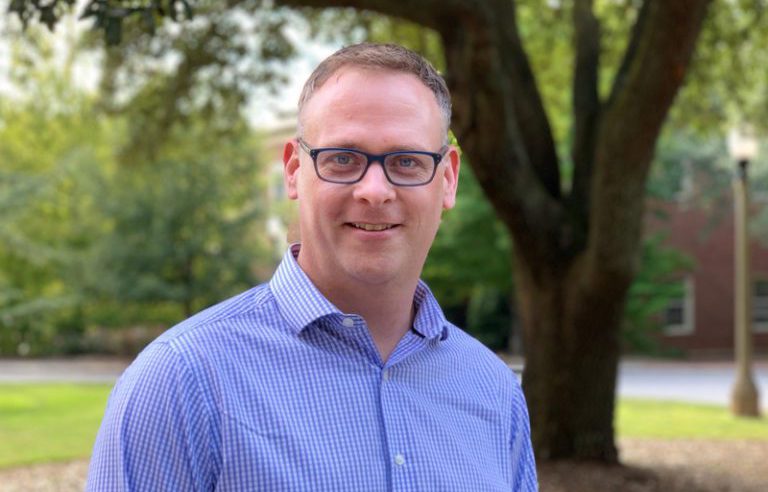
Kevin Hutson shares his thoughts on what comes next in the higher education landscape.
Even though we have seen tremendous growth already, the Bureau of Labor Statistics projects the growth in the data analytics/data science sector during the next decade to be at 36 percent. That means colleges and universities must continue to introduce programs to supply the workforce with the skills needed to keep pace with this rapidly changing environment.
In response to these trends, Furman introduced an interdisciplinary minor in data analytics in 2021, with help from alumni in this area. They encouraged us to focus on skills that really mattered in the workplace, such as being able to ask important questions, to work as a team and to communicate effectively.
Our design of the five-course minor requires students to complete courses in computer programming, statistical analysis and an introduction to machine learning. For two of these courses there are group projects requiring students to design their
own study, to perform the analysis appropriately for that class and give multiple presentations on the results.
The minor was popular immediately with 20 graduates in its first year. This year, number four, we grew to 55 graduates. And of the 130 currently declared data analytics minors, 28 different majors are represented, reflecting the impact of the minor across campus and industries.
Our graduates are finding employment with top companies, including manufacturing (BMW, Michelin), finance (Bloomberg, Bank of America), consulting (Deloitte, Ernst & Young), sports (Tampa Bay Rays, McLaren Formula 1 Racing) and technology (Red Ventures, Blackbaud).
Establishing industry partnerships is an important future direction for us. We’ve met with success in attracting internship opportunities for our students with companies such as Milliken, Amazon, Prisma Health, Wells Fargo, Samsung and research opportunities with BMW and the Atlantic Coast Conference, among others. Partnering with these groups exposes our students to challenges faced in industry while highlighting the tremendous value Furman students bring to these companies to provide solutions.
About the Author
Kevin Hutson is a professor of mathematics at Furman University and has always been interested in applying mathematics to the real world. He gave up his industrial career to pursue mathematics because he wanted to apply his work in a real-world setting and show students the applications of what they are learning.