News from campus and beyond
Summer chemistry research fuels curiosity
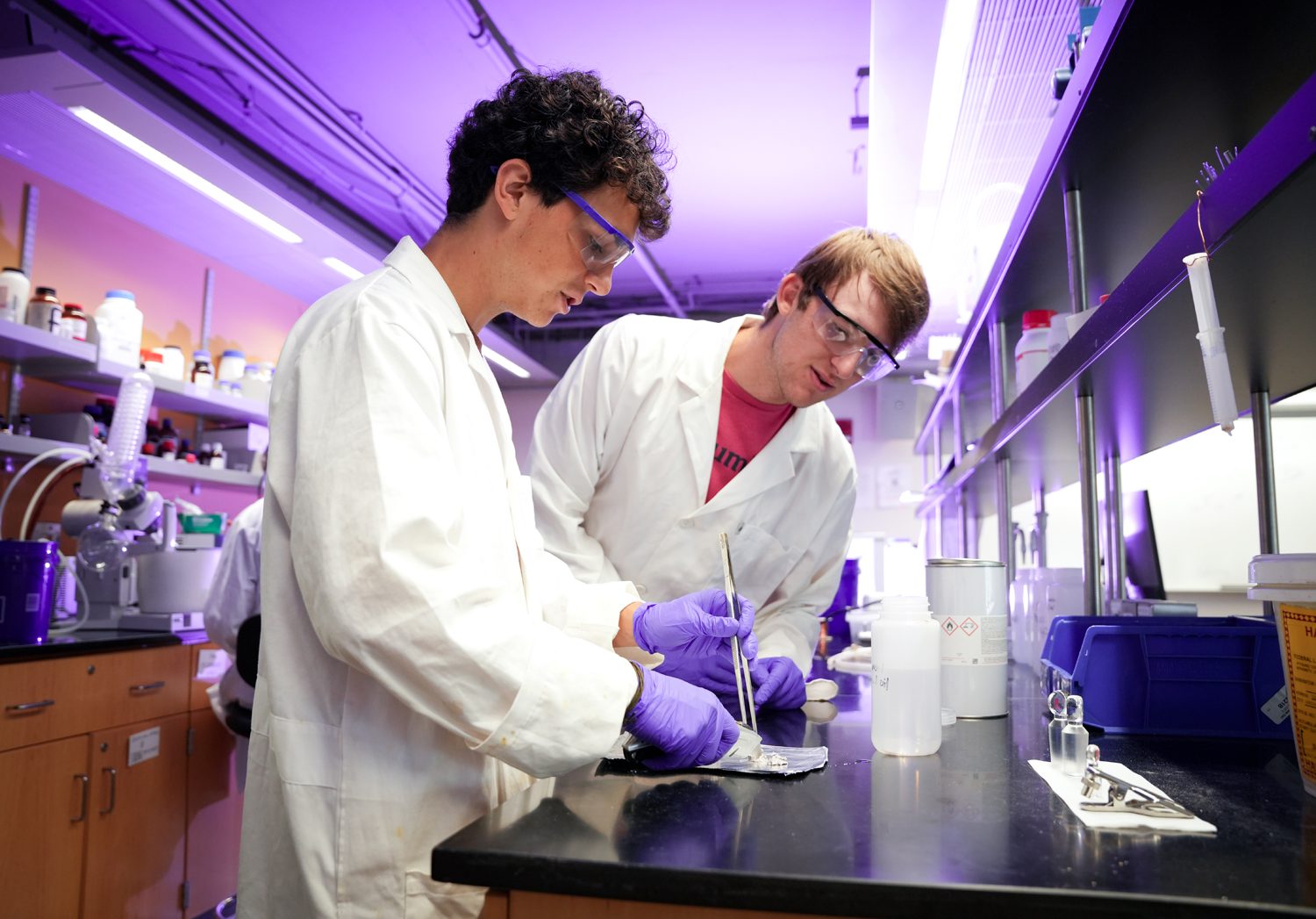
Alexander Underwood ’26, left, and Nate Lobb ’26 work in a chemistry lab in Plyler Hall while conducting summer research on June 18, 2025. They are among 240 summer research fellows at Furman this year. Photo by Nathan Gray, Furman University.
Alexander Underwood ’26 came to Furman University craving the chance to learn something new and found it through undergraduate research.
His high school chemistry classes in his home of Fort Mill, South Carolina had left him eager to learn more. “Everything I was taught in my high school classes was something that’s been done already,” Underwood said.
As a first-year student at Furman, he was looking for opportunities to research topics he’d never even heard of. That opportunity came quickly.
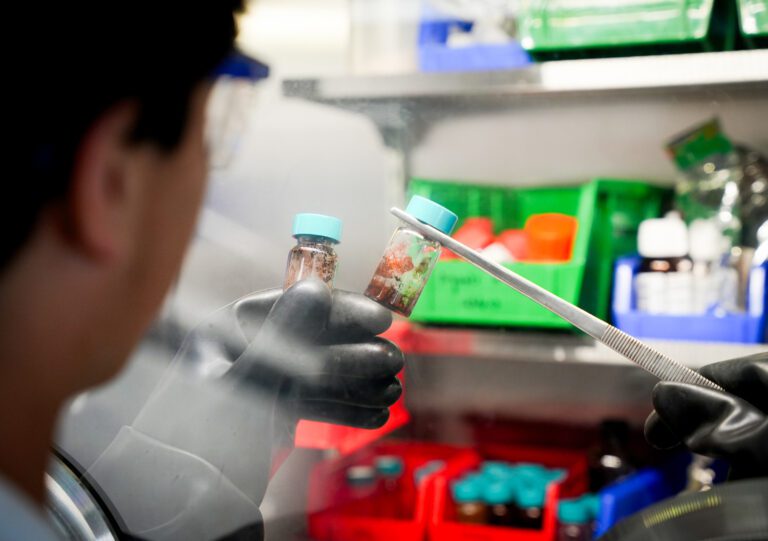
Alexander Underwood ’26, seen here working in a chemistry lab in Plyler Hall, said lab research teaches you firsthand things you don’t find in a typical textbook or classroom setting. Photo by Nathan Gray, Furman University
“I was in Dr. Gary Guillet’s Chemistry 110 class my first year, and he reached out to me with an offer to work in the lab,” Underwood said.
Underwood was surprised he had the chance to get lab experience in his first year at the university. He’s one of 240 Furman students working as summer research fellows, and one of five students working in the lab with Guillet, associate professor of chemistry.
Summer research fellows receive discounted summer housing and stipends, from $3,500 to over $5,000, said Erik Ching, the Walter Kenneth Mattison Professor of History, interim associate provost for Engaged Learning, and director of Undergraduate Research.
Underwood has spent two years in Guillet’s lab since first being recruited, and he’s performing reactions he never imagined: synthesizing ligands that help facilitate a unique type of metal bond. It’s a continuation of some of Guillet’s earlier work on iron bonds and gives Underwood the chance to run unique reactions he hasn’t read about in any textbook.
“He took a chance on me and really helped guide me from my first year. I don’t know if there’s any other undergraduate institutions that offer that,” Underwood said. “I would have made my college decision in a heartbeat if I had known I’d be doing anything like this.”
For Guillet, Furman’s strength lies in its faculty. Professors are driven to work with undergraduate students in and outside of the classroom, and they’re equipped with top-quality scientific instruments and lab spaces that many small schools lack. Most people think this level of academic research is reserved for graduate students, “but Furman students can produce at that level already, so I figure why not set the bar for them and push them there,” Guillet said.
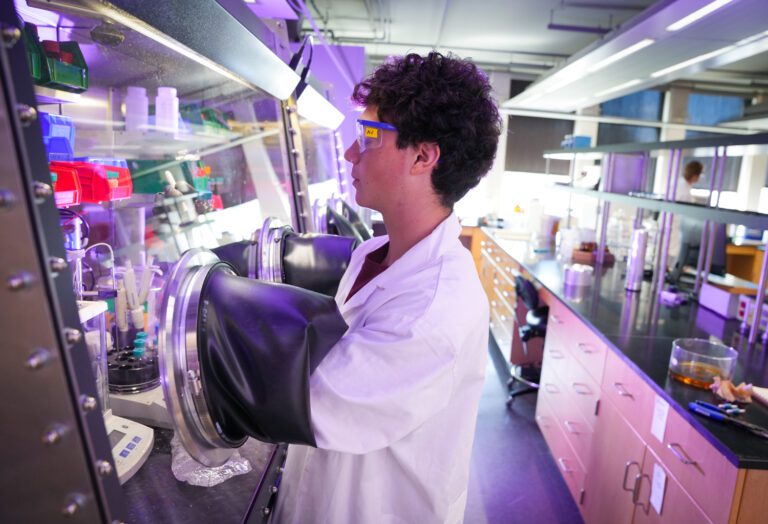
Alexander Underwood ’26 works in a chemistry lab in Plyler Hall while conducting summer research on June 18. Photo by Nathan Gray, Furman University
Underwood enjoys a level of independence in the lab, and the students are encouraged to be collaborators, bringing their ideas and input to each reaction they perform. He helps introduce new lab partners to the work and shares his excitement and encouragement with them.
“I’m not even doing the research for credit now, I just can’t see myself not doing this research next year,” he said.
He’s working on a research paper and had the chance to present his work at the 2024 Southeastern Regional Meeting of the American Chemical Society. He also gave a presentation during Furman Engaged, the university’s annual celebration of students’ diverse engaged learning experiences. He’s looking forward to publishing the paper he’s drafting for his senior thesis and hopes other researchers will build off the work he’s done at Furman.
The classroom isn’t the only place students learn lifelong lessons, Guillet said, and the lab is a place where Underwood and others hone their “focus, perseverance and the ‘need to know’ sensation that research engenders, and that researchers must have.”