News from campus and beyond
Women’s History Month: Angélica Lozano-Alonso remembers Latin American women
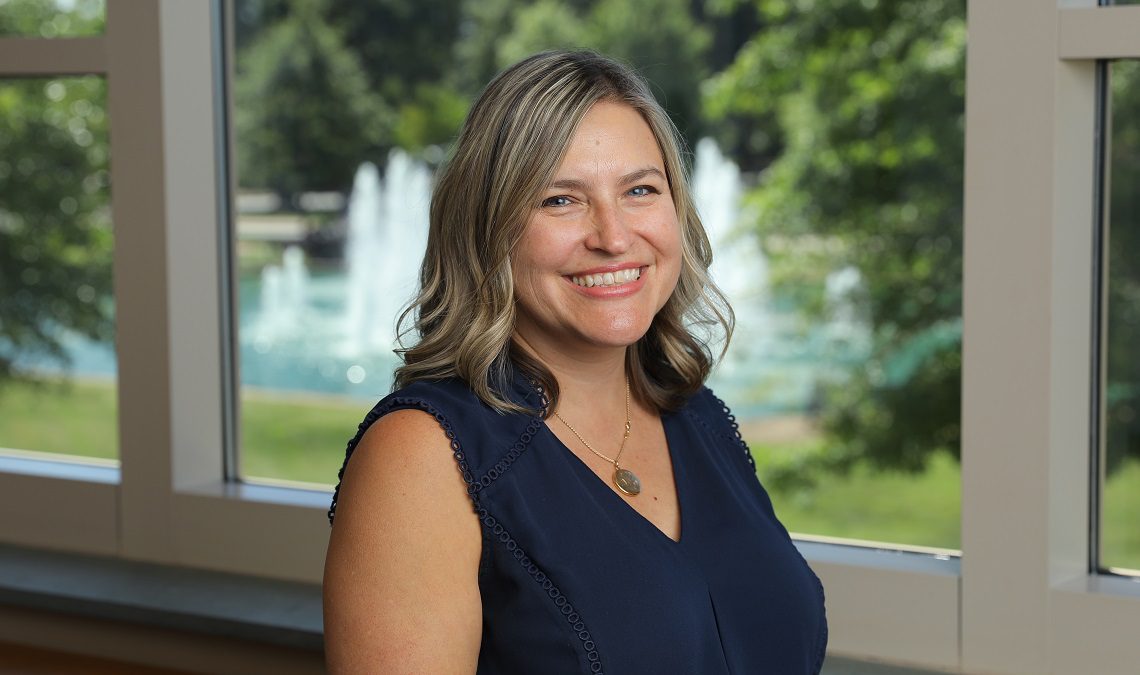
Angélica Lozano-Alonso, Department of Modern Languages and Literatures.
Angélica Lozano-Alonso, a professor of Spanish and the Spanish language coordinator, joined Furman University in 2001 from Cornell University, where she received master’s and doctoral degrees. She grew up in Colorado with a Chicano father from Texas and a mother who was from Mexico City, and she traveled frequently to Mexico to visit family. She was Phi Beta Kappa at the University of Colorado, where she received her bachelor’s degree.
Q: What’s been the most significant development for women in your field?
A: Over the history of Latin American literature there have been numerous women writers who have given voice to women, either through their characters or their perspectives. They haven’t always been studied or published, but they have always written. The first Latin American woman writer who was published that considered gender and women’s positionality was a Mexican colonial nun, Sor Juana Ines de la Cruz (1651-1695). She was self-taught, and when tested by a panel of university professors from different fields, she astonished them with her vast knowledge of all subjects. She questioned societal expectations and scandalized the clergy with her passionate poetry and Biblical knowledge. She questioned the hypocrisy of a society that penalized women for the same actions that brought men acclaim. In the end, the church punished her by making her give away her library that was the largest collection of her era. She died caring for victims of the plague.
In the field of Latinx Studies, the publication of “This Bridge Called My Back” (1981), coedited by Gloria Anzaldua and Cherríe Moraga, was groundbreaking. In the anthology, women of color declared that first-wave feminists failed to address other aspects of women’s identities that made it more difficult for women of color to have a metaphorical and literal room of their own. Though we now have the language of intersectional identities, when this book was written it was the first time that class, national and racial identity were identified as important factors when considering women’s identity and the resources and opportunities provided to them.
Q: Who has inspired you?
A: I come from a long line of women who were teachers and readers. Though it may sound cliché, my mom is my biggest inspiration. She wanted to become a lawyer but for women of her generation, her only choice was to become a teacher. She began her career in Mexico as a preschool educator, but then when I was in junior high she earned her Ph.D. in Latin American literature while working full time as a Spanish high school teacher in a public school. Over the course of her career, she received numerous awards for her teaching and for creating an innovative program that helps Mexican immigrant children graduate from high school. What I most admire about my mom is her curiosity for the world and her love for her community. I love teaching, reading and community outreach because I had a great role model in my mamá.
Q: What do you want people to know during Women’s History Month?
A: Women’s history belongs to all of us. While it has not always been documented in hegemonic ways, women have played significant roles in all aspects of society. Thinking about who gets to write history and whose history gets to be told, is ultimately a story about who has the power and who does not. Uncovering history that has been ignored allows us to consider how history is written and to learn more about our shared humanity. Studying women’s history gives us a far richer knowledge of our past.
Q: What advice would you give to the next generation of women pursuing this career?
A: Literature is one of the pillars of a liberal arts education. Being able to study literature in another language helps students to deepen their knowledge of culture and to develop their advanced- and superior-level proficiency skills in Spanish. Literature lets us know what a culture values and believes. It is yet another way to better understand different world views and gain empathy for everyone who shares our planet. If we only examine literature and history written by and about men, then we are leaving out half of the picture. Exploring women’s studies within the field of Latin American literature deepens our understandings of our world community as it informs us on structures of power. Learning how to analyze literature is essential to developing critical thinking, and being able to do so in a foreign language is a transferrable skill that can open up many doors. In a recent life and language program, our alumni mentioned that being skilled in a foreign language has helped them to become better communicators in varied work settings.