Two hundred years of bold ideas, defining moments, and the people who shaped them.
Furman’s story is one of ambition, resilience, and transformation. Along the way, there have been championship seasons and groundbreaking firsts, times of hardship and moments of reckoning, visionary leaders and generations of students who went on to change the world.
Scroll through the milestones that made Furman the university it is today.
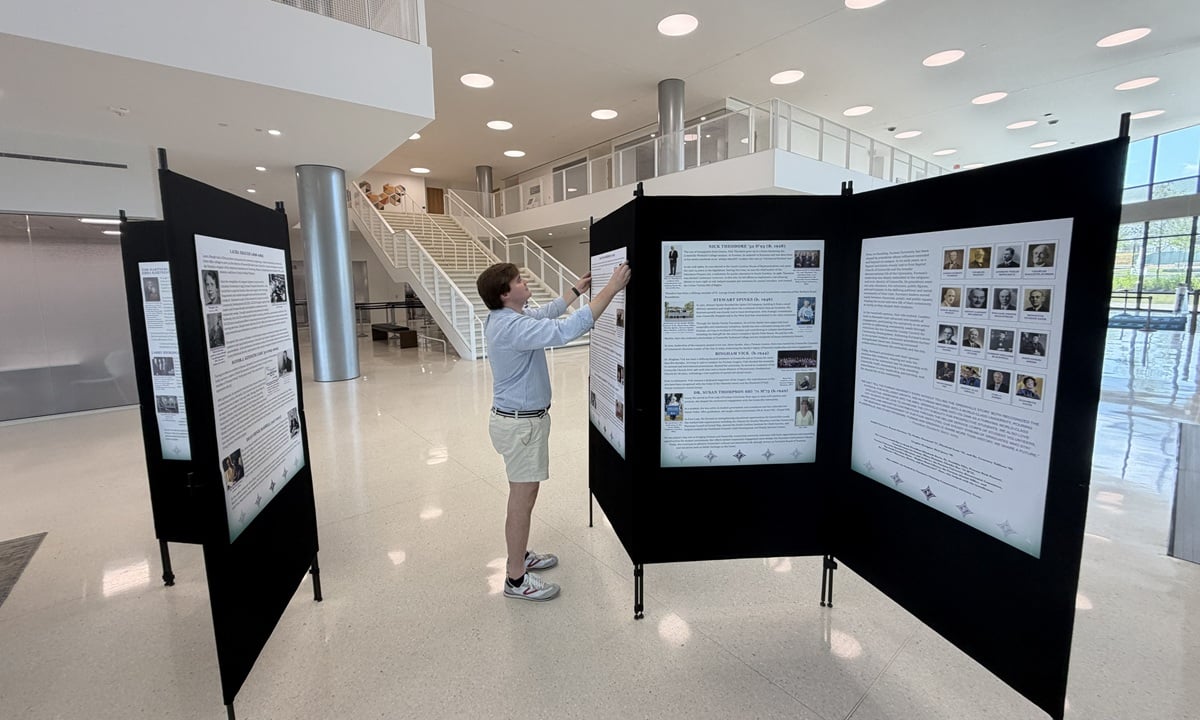
Watch the live forum of Historian Courtney L. Tollison Hartness ’99 discussed her new book, Furman University: A Bicentennial History, 1826-2026, the definitive chronicle of Furman’s 200-year journey.
A Bicentennial History, 1826-2026
1755:
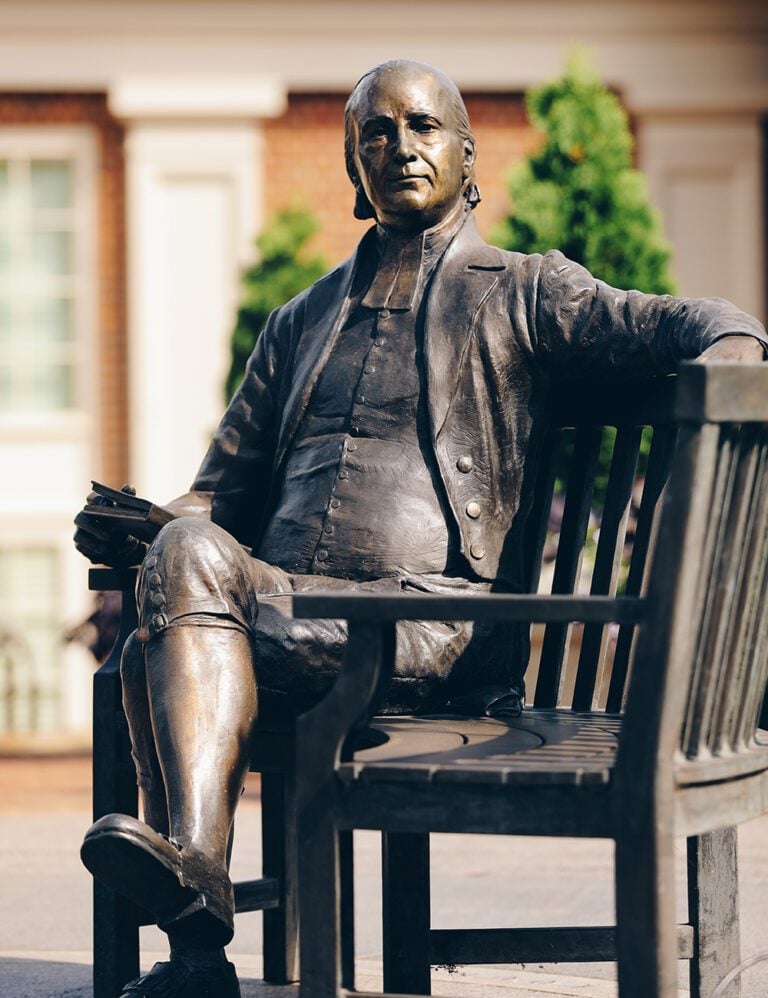
Dr. Richard Furman was born in Esopus, NY. Over his lifetime, he became the leading Baptist leader in the colonies and the new nation. Through the establishment of the triennial convention and the founding of the South Carolina Baptist Convention, which provided a model for other states, he implemented structure and organization to the Baptist denomination. His fervent belief in the power of education resulted in the establishment of educational institutions, five of which remain today.
1825- 1826:
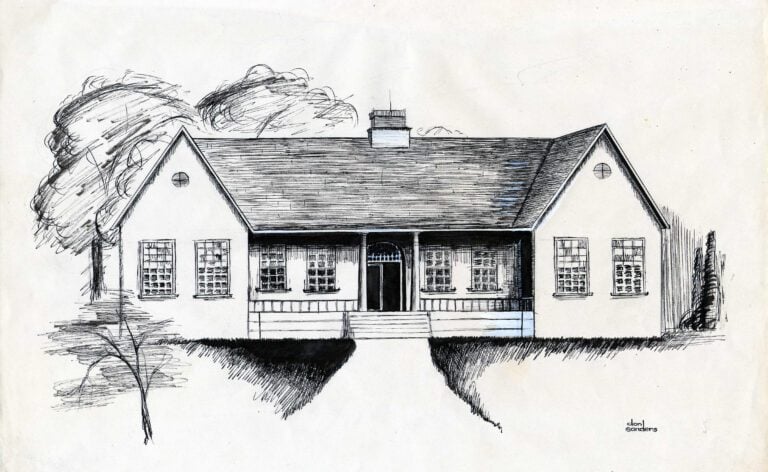
After Richard Furman’s death in Charleston in 1825, the South Carolina Baptist Convention established an academy and theological institution for young men in his name. The Furman Academy and Theological Institution began classes began in Edgefield, SC on January 15, 1827.
1830s–1840s:
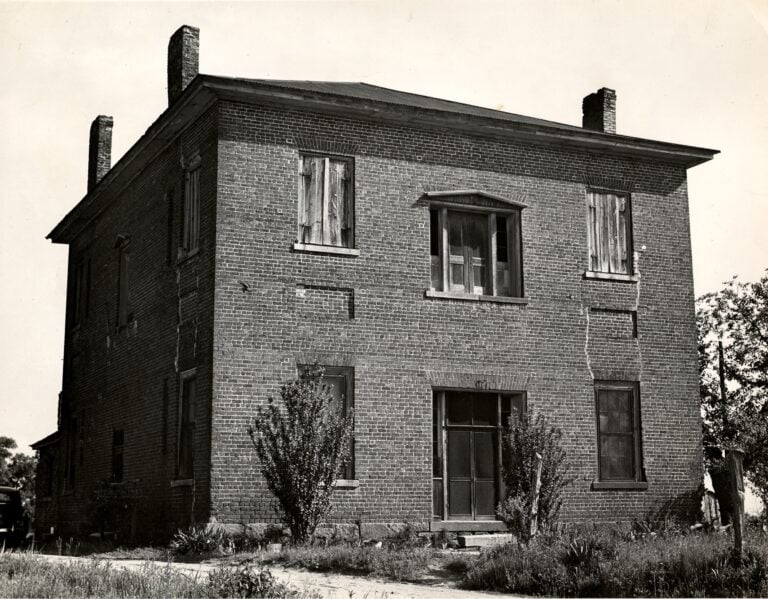
The Institution operated under various names and, in its search for stability, moved from Edgefield to High Hills of Santee to Winnsboro. In the late 1840s, university leaders began to search for another home for the institution.
1850–1851:
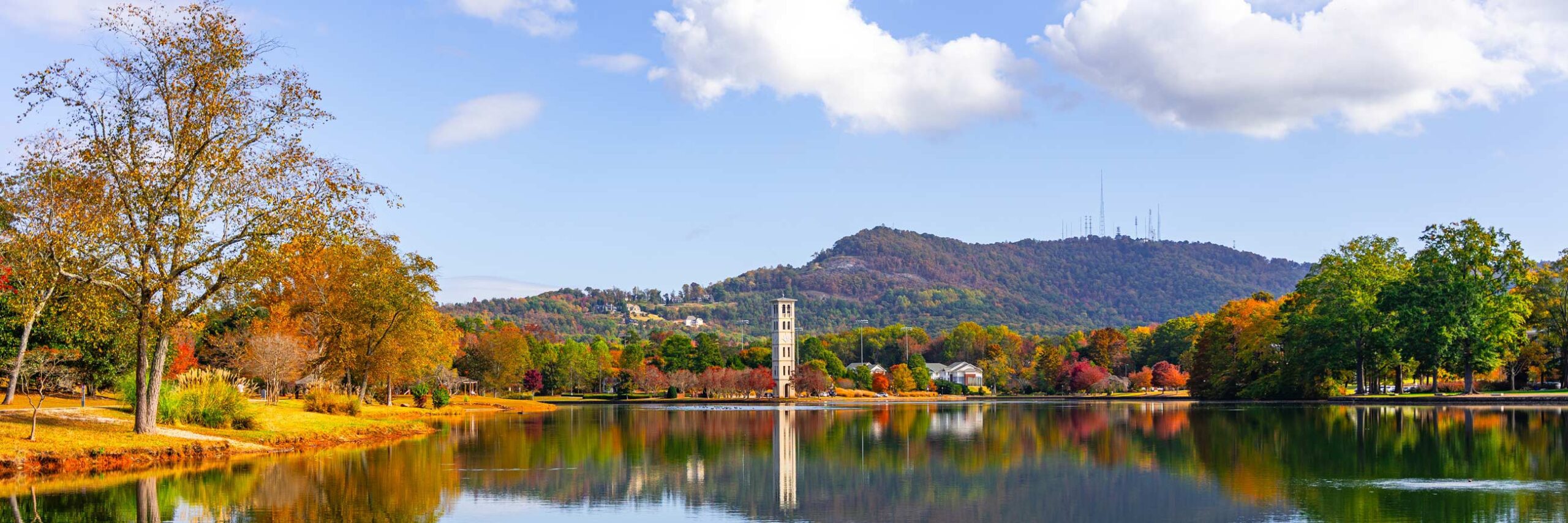
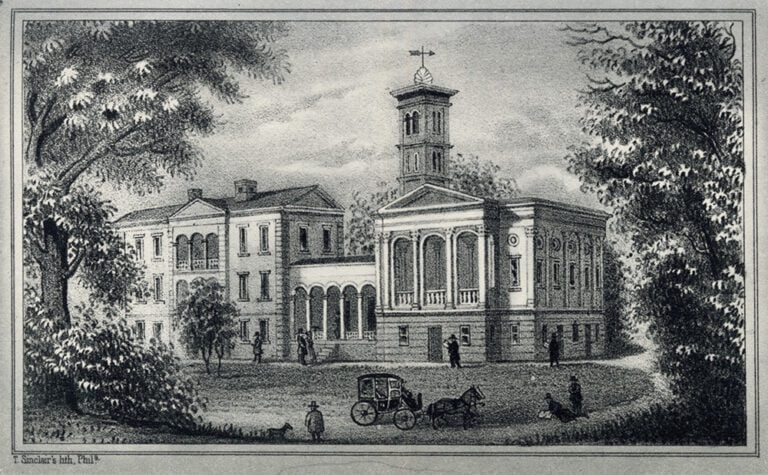
After university leaders selected land overlooking the Reedy River in the village of Greenville, the institution was re-chartered as The Furman University and began classes in Greenville in 1851. Three years later, the university’s first permanent building opened. Known as Old Main and designed by noted Charleston architect Edward C. Jones, it featured a soaring Florentine Bell Tower that quickly became the university’s most recognizable icon.
1854:
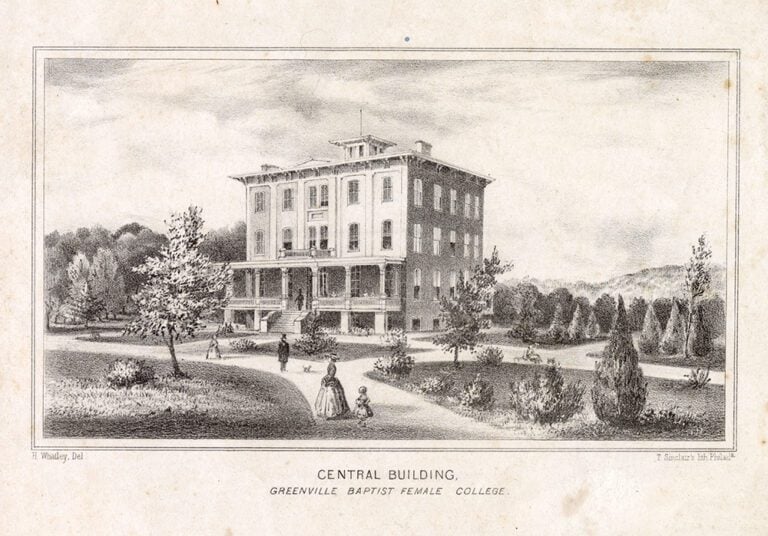
South Carolina Baptists established a college for women in the village of Greenville. Known as the Greenville Baptist Female College, it was located on the present-day site of Heritage Green. Later, the college dropped Baptist from its name and eventually became known as the Greenville Woman’s College.
1859:
In the late 1850s, Furman Professor James P. Boyce and others established The Southern Baptist Theological Seminary. In 1879, the seminary became independent of Furman and moved to Louisville.

1861–1865:
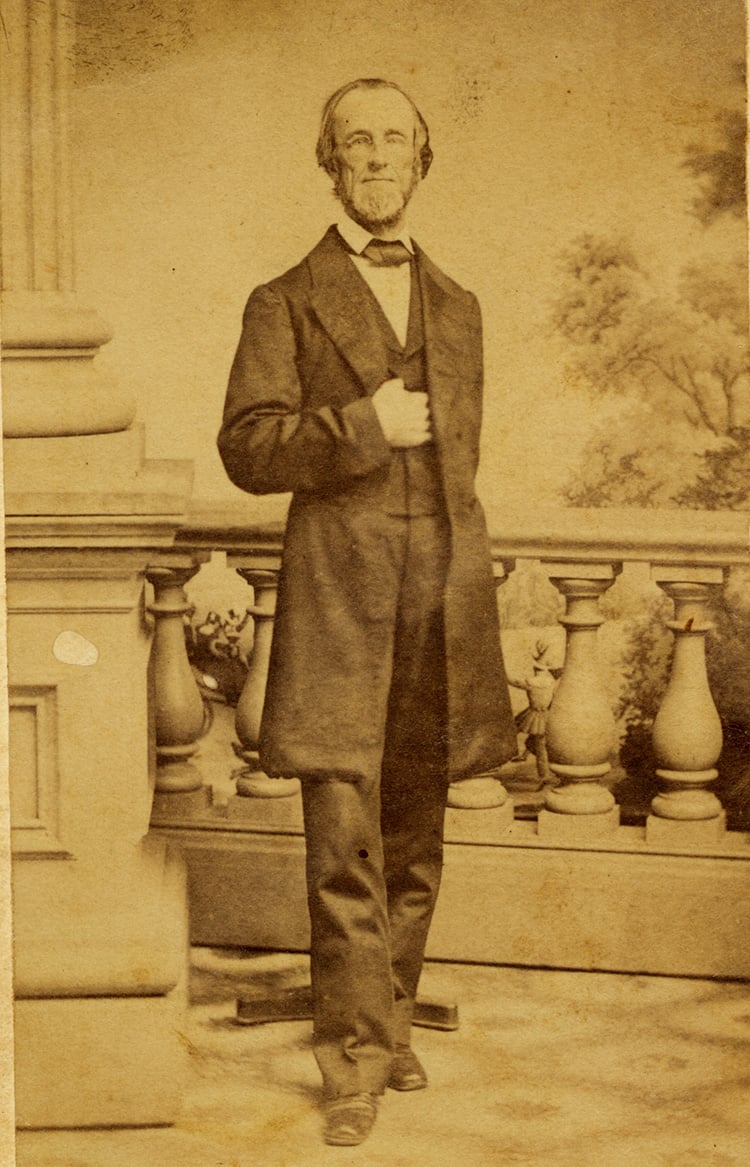
The Civil War severely disrupted enrollment and operations, as many students and faculty joined the Confederate military. In the war’s aftermath, the university struggled mightily as Dr. James C. Furman, one of Dr. Richard Furman’s 17 children and the university’s first president, fought to save it.
1889:
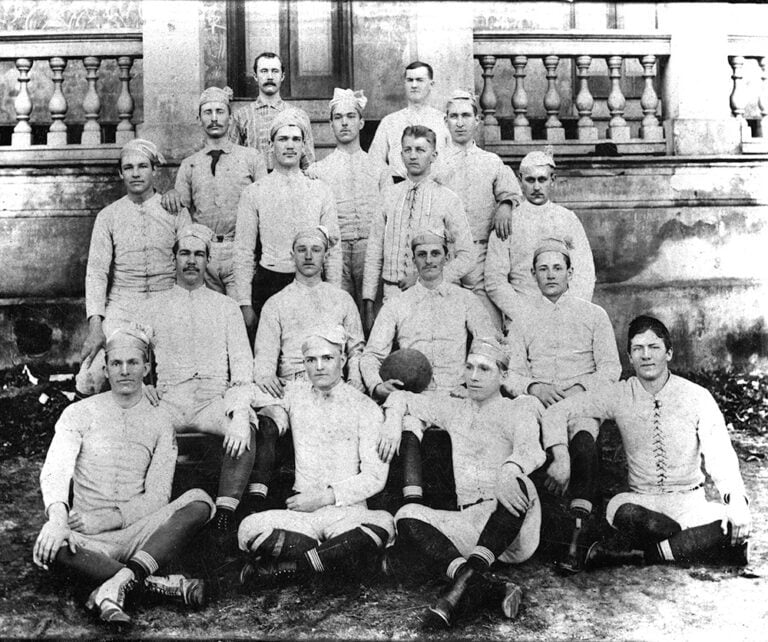
Furman played Wofford in South Carolina’s first intercollegiate football game. Soon thereafter, alumni selected royal purple and white as the university’s colors, and in 1891, Furman students organized the university’s first baseball team.
1907:
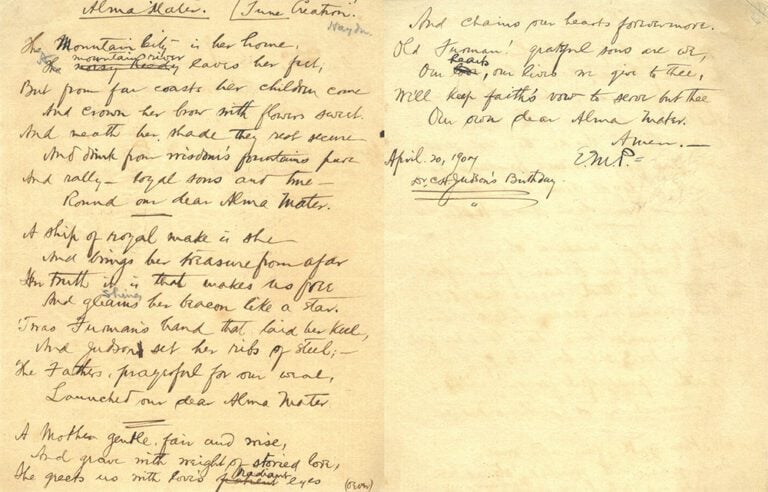
Furman President Dr. Edwin Poteat sought to implement a greater sense of university identity and esprit de corps. In 1907, Poteat penned lyrics that became the university’s alma mater, and the student newspaper, The Hornet, began in 1916.
1924:
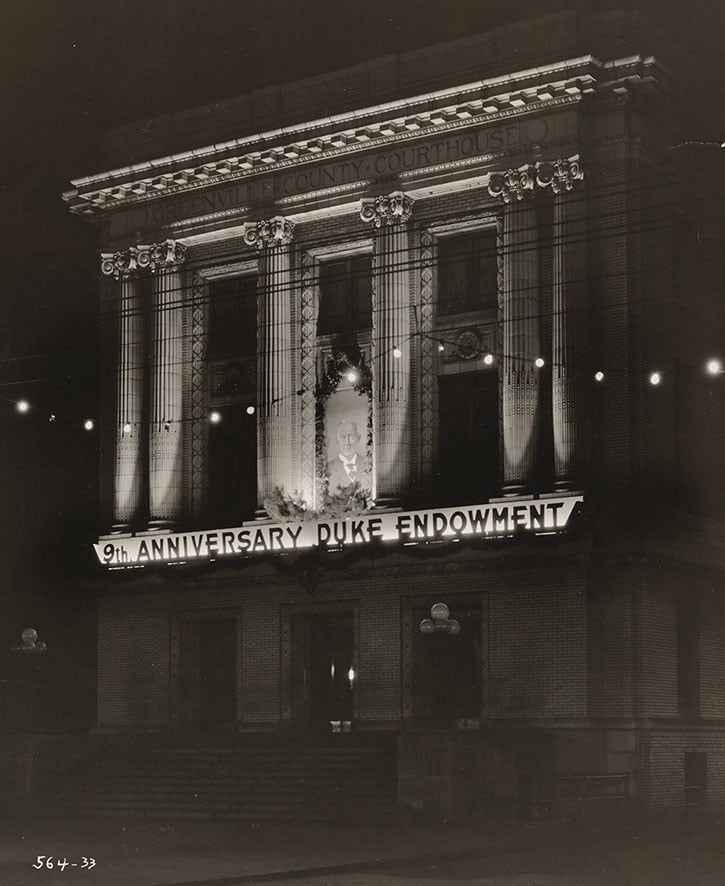
Furman University gained accreditation and became a beneficiary of the Duke Endowment. Between 1924 and 2024, the Duke Endowment granted over $535 million (adjusted) to the university.
1930s:
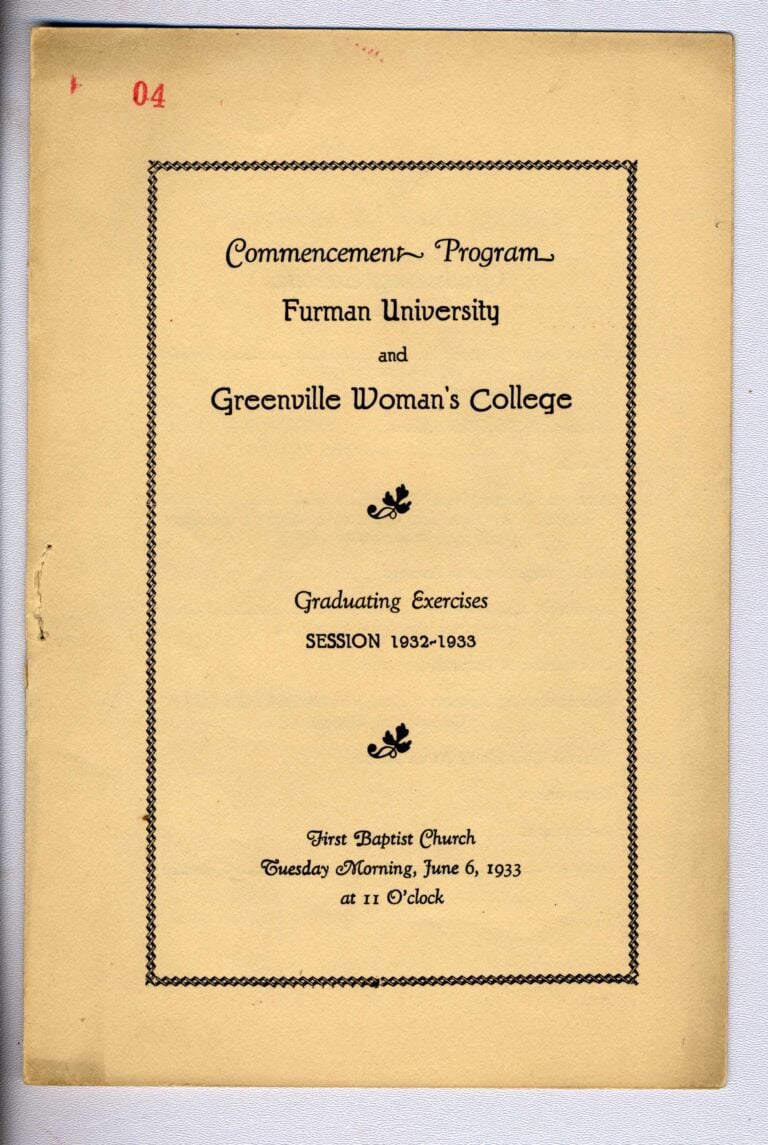
The Great Depression ushered in economic challenges that led to the merger of the Greenville Woman’s College with Furman. The college became known as the Woman’s College of Furman University, and continued operations on its campus.
1933:
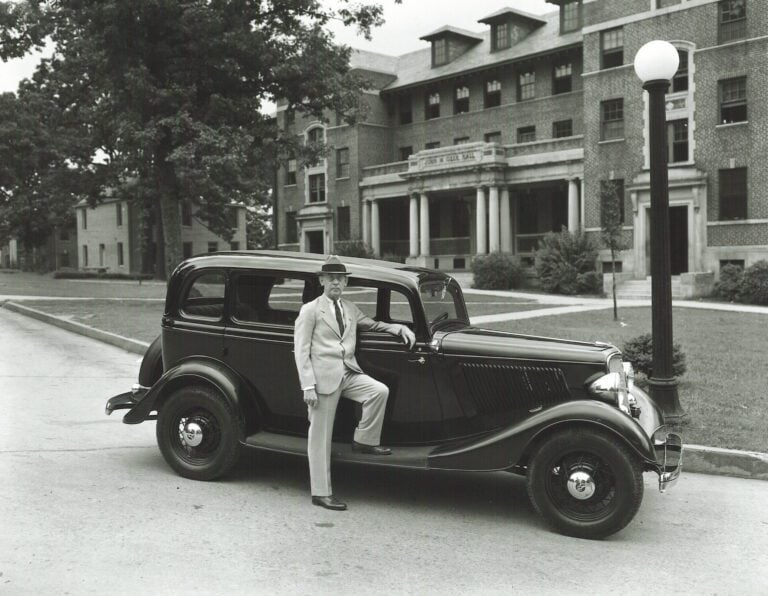
Greenville business leader and former dean of the university, Bennette Eugene Geer ’96, became the first alumnus to serve as president of Furman. For the next 77 years, Furman University was led by a president who was also an alumnus.
1936:
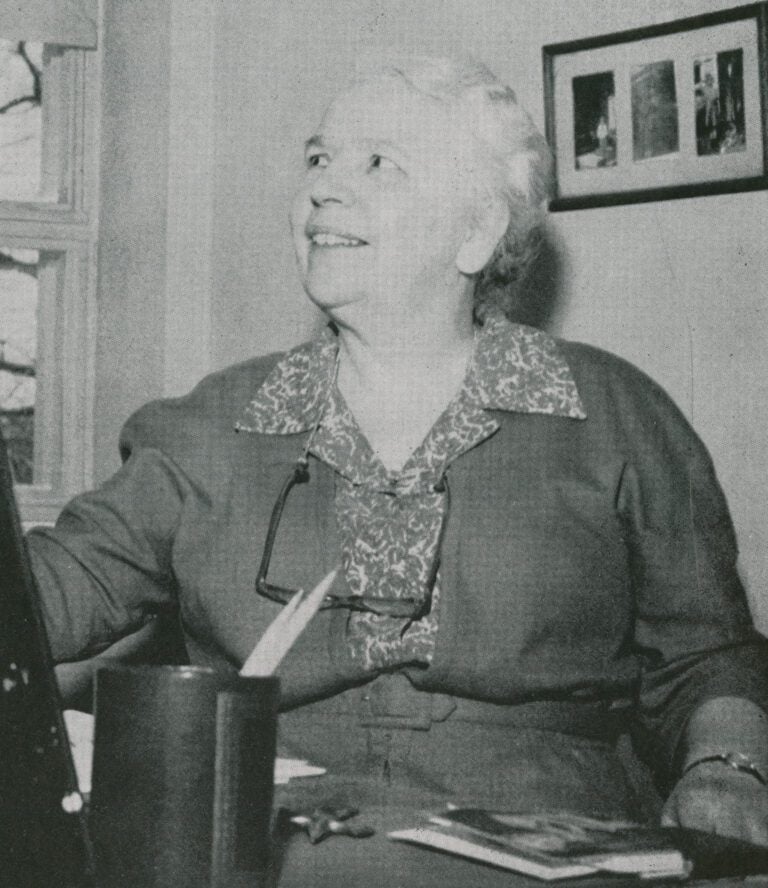
Under President Geer, Furman professors Laura Ebaugh and future President Gordon Blackwell ’32 led the Greenville County Council for Community Development. The GCCCD engaged students in research, social welfare programs, and community planning, and established a foundation of involvement with the local community that the university continues to build upon.
1946-1961:
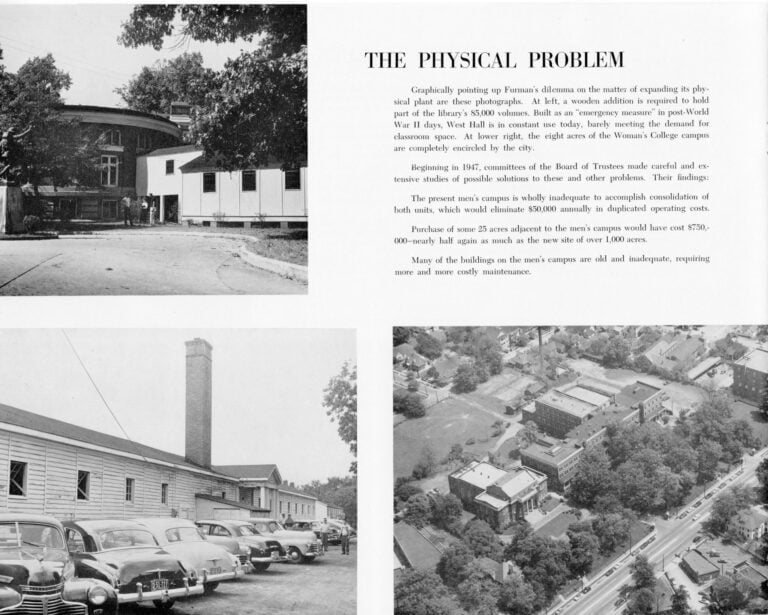
A postwar surge in enrollment, resulting from the return of World War II veterans, strained both of Furman’s campuses, prompting campus-planning discussions among administrators and trustees.
1953:
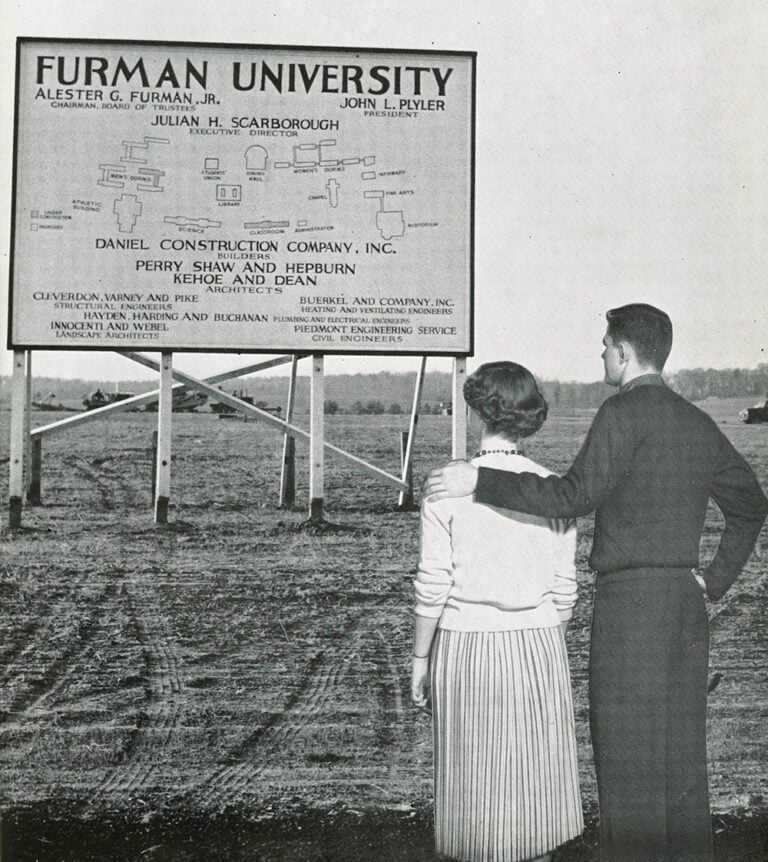
Trustees purchased land north of downtown Greenville in 1950 and broke ground in 1953 on a larger campus on Poinsett Highway near Paris Mountain. By the fall of 1958, most men and senior women had moved to the new, consolidated campus.
1954:
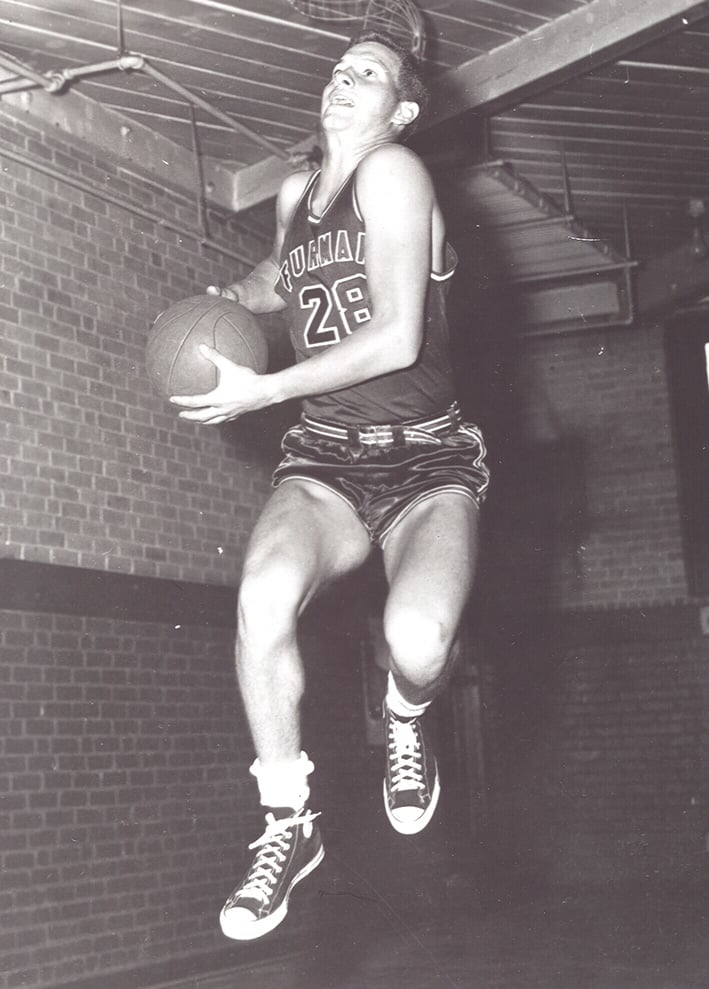
Before the implementation of the three-point basket, Furman basketball stalwart Frank Selvy ’54 scored 100 points against Newberry College in the first basketball game to be televised in South Carolina. He remains the first and only NCAA basketball player to have accomplished this feat.
1961:
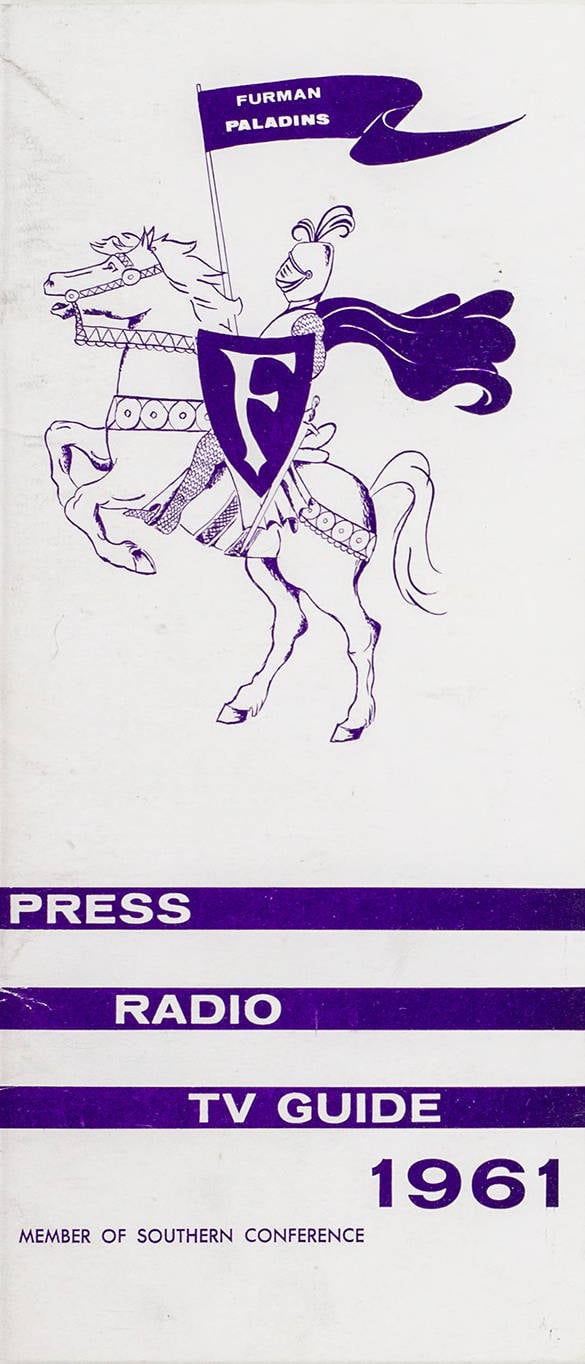
With the completion of the women’s residence halls, Furman University became a fully coeducational institution operating on one campus. After a student vote to unify all sports teams under one mascot, the university’s teams became known as the Furman University Paladins.
1963–1965:
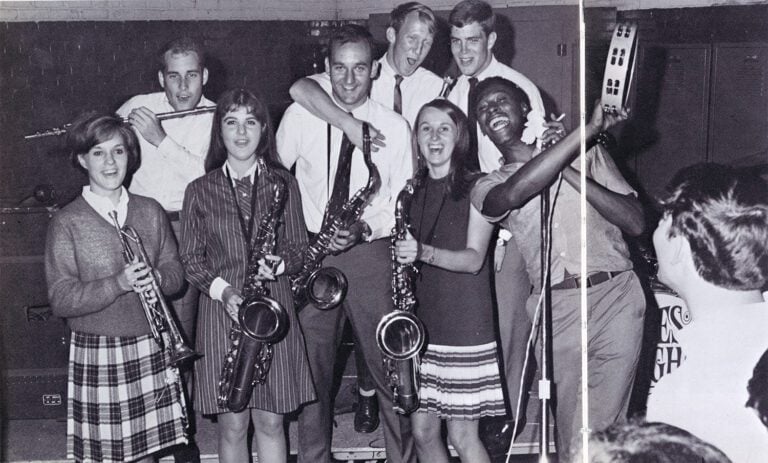
Furman trustees voted in October 1963 to racially desegregate the student body, but acquiesced weeks later to the South Carolina Baptist Convention’s request for a one-year delay. Months after the passage of the Civil Rights Act of 1964, Furman trustees defied the SCBC and voted to admit Black students. On January 29, 1965, Greenvillian Joseph Allen Vaughn ’68 enrolled as Furman’s first Black undergraduate. In 2021, a statue of Vaughn was erected outside the James B. Duke Library.
1973:
After consistently applying for a chapter since 1927, Furman was granted the Gamma Chapter of South Carolina by Phi Beta Kappa on December 5, 1973.

1976:
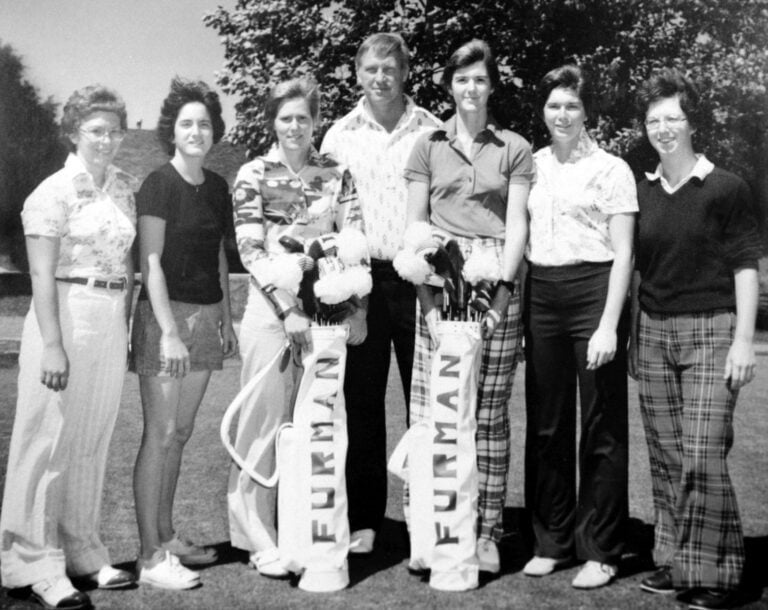
Furman won its first national championship title when the women’s golf team secured the Association for Intercollegiate Athletics for Women (AIAW) National Championship.
1988:
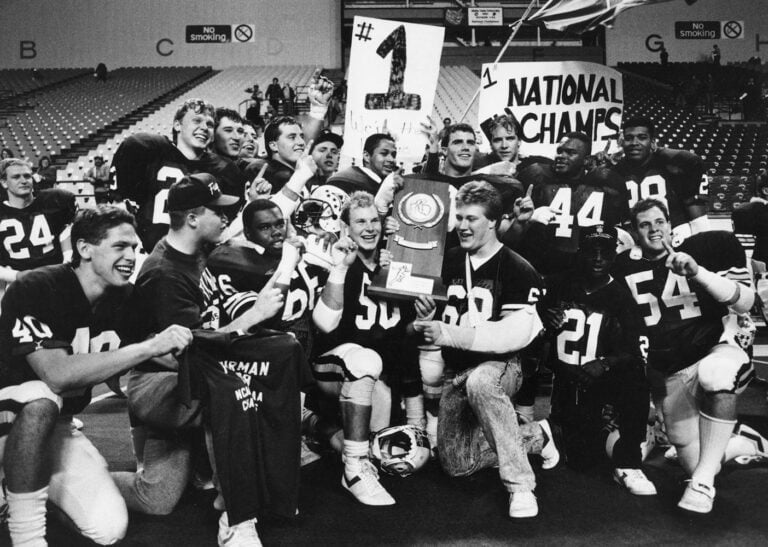
Three years after the Paladins were the national runner ups, Furman’s football team returned to the national championship, beating Georgia Southern University and becoming the first private institution to secure the NCAA Division I National Championship title.
1990–1992:
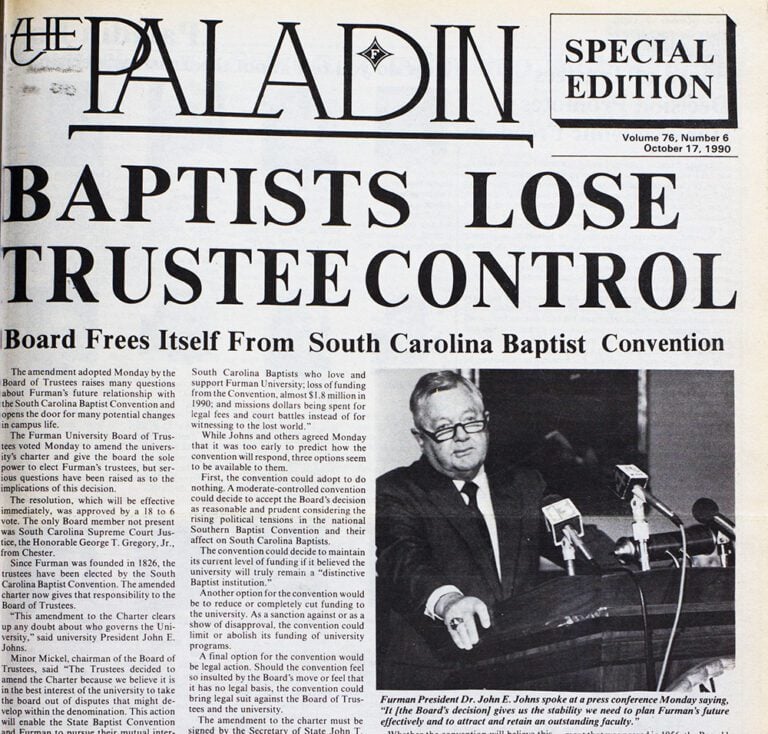
As a result of conflicting values and visions, Furman trustees voted to disaffiliate from its founding institution, the South Carolina Baptist Convention.
2000s:
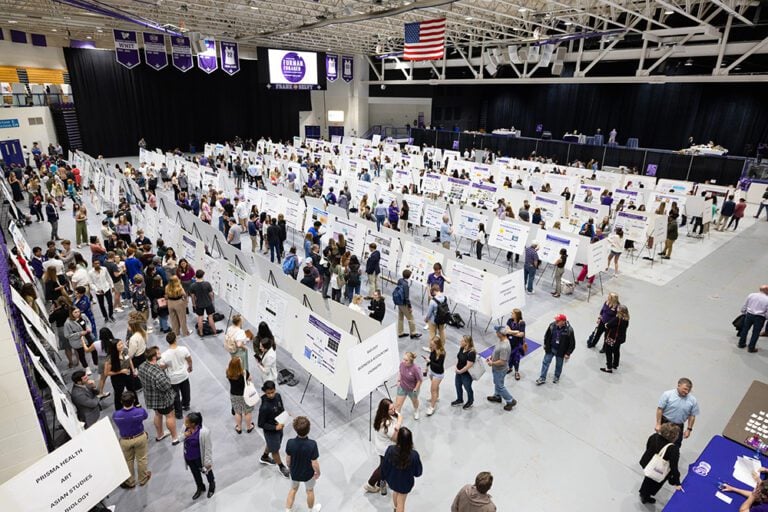
Under President David E. Shi ’73, the university became a national leader in engaged learning and sustainability. In 2009, Furman held its first Furman Engaged, an annual event that showcases undergraduate research, internships, and other engaged learning experiences.
2016:
Under President Elizabeth B. Davis, Furman launched The Furman Advantage, a personalized, four-year pathway that includes high impact experiences such as research, internships, and study away and support from a team of mentors and advisors.

2017–2019:
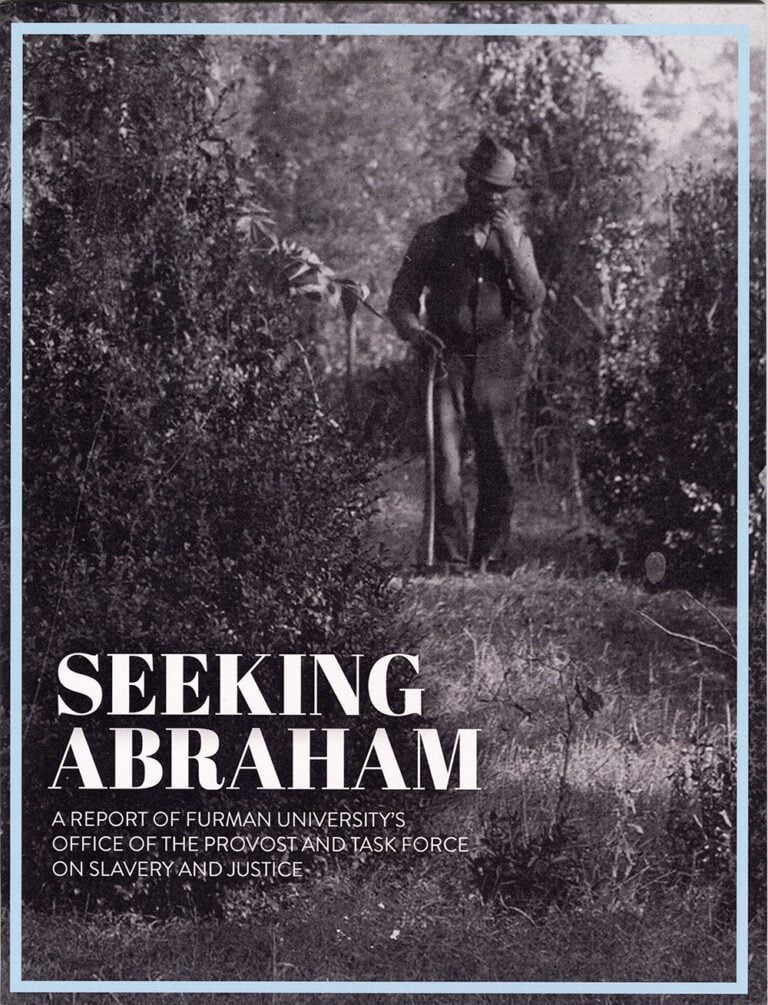
Furman’s Task Force on Slavery and Justice issued Seeking Abraham (2018), a report documenting the university’s historical ties to slavery and offering recommendations for acknowledgement and reparative initiatives, which included new plaques, the naming and renaming of buildings, the Joseph Vaughn statue and annual commemoration, curriculum changes, community engagement, and more.
2019:
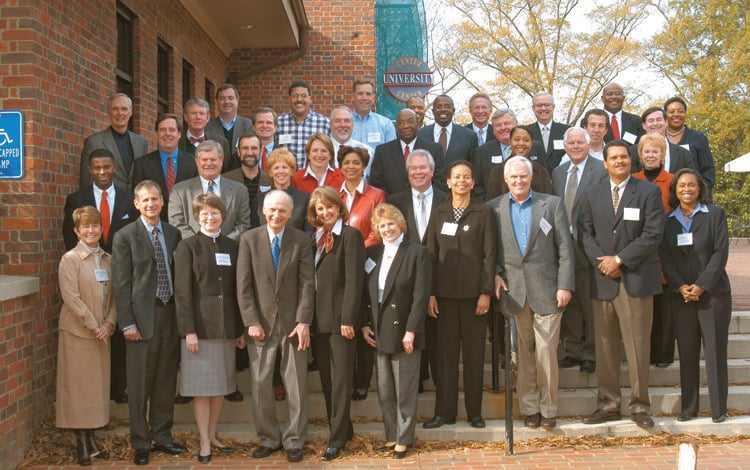
The Richard W. Riley Institute for Government, Politics, and Public Leadership celebrated its twentieth anniversary. Its success, alongside the David E. Shi Center for Sustainability (2008), inspired the creation of the Institute for the Advancement of Community Health in 2016 and the Robert and Margaret Hill Institute for Innovation and Entrepreneurship in 2018.
2023:
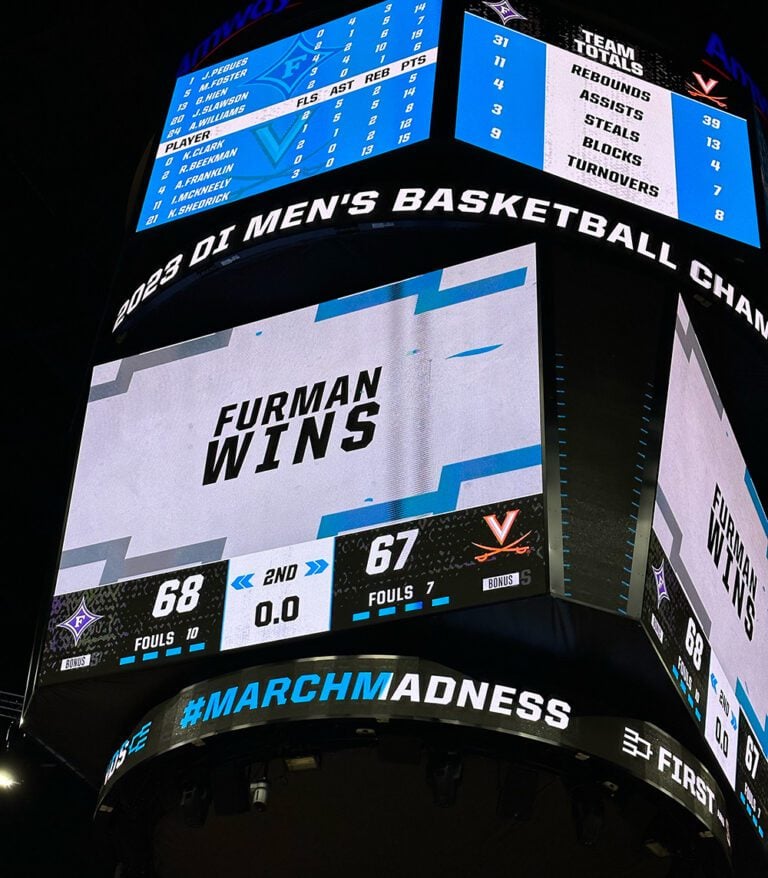
During March Madness, men’s basketball beat the University of Virginia to advance to the second round of the NCAA Tournament, a feat it had accomplished once before, in 1974.
2025:
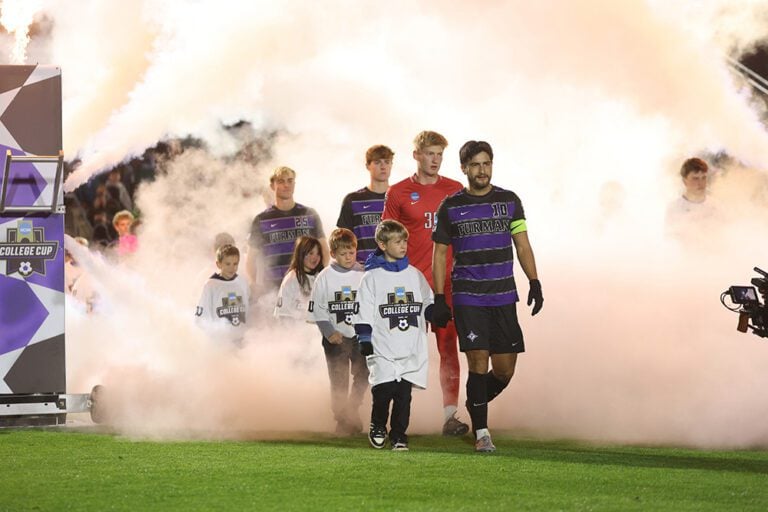
In the last game of men’s soccer coach Doug Allison’s thirty-one year career at Furman, men’s soccer competed in the NCAA College Cup, the final four of men’s soccer.
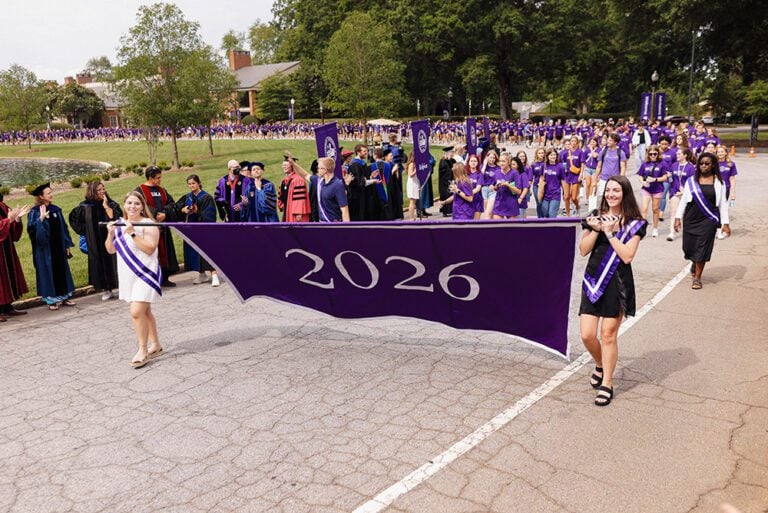
2026:
Furman celebrates its bicentennial!